Marrakech, Merzouga and Essaouira – North Africa
Morocco at a glance
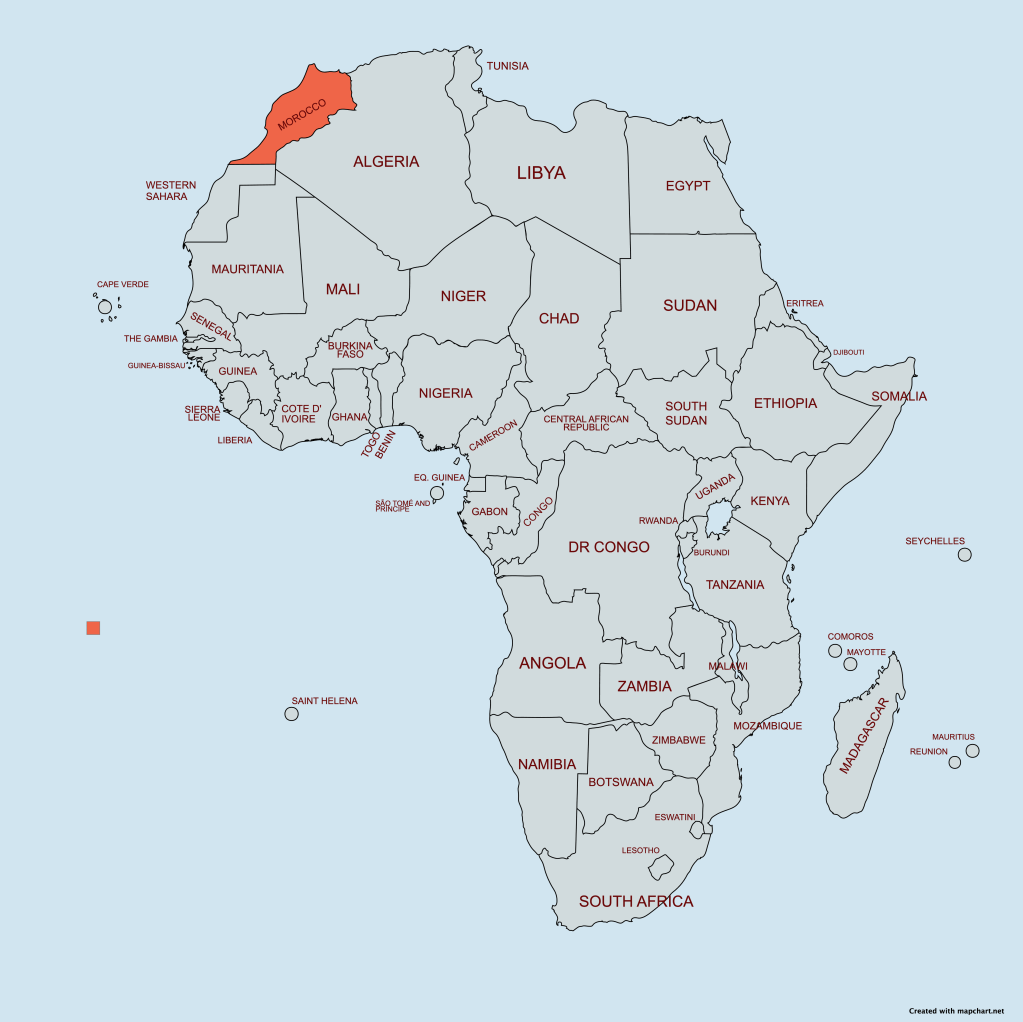
Morocco sits in the northwest corner of Africa, right across the Strait of Gibraltar from Spain — meaning it’s technically closer to Europe than most people realize. It borders the Atlantic Ocean to the west, the Mediterranean Sea to the north, Algeria to the east, and the Sahara Desert to the south. For Canadians, it’s roughly an 8–9 hour flight from Montreal, often with one stop. It’s an Islamic country with a population of about 37 million.
Marrakech
The first 3 days of our 9-day trip were spent in Marrakech, Morocco’s most visited city and for most travellers the obvious starting point. We had booked a charming riad (traditional guesthouse built around a courtyard), and while it was certainly different than you’d expect by North American standards, it was great in all its quirkiness.
Picture shutters for doors that you lock with a padlock when you leave for the day. Non-existant shower curtains so that your entire bathroom is a water closet. Glass doors as your main door with the main light switch in the outside hallway. It’s unconventional, but we loved it because it enabled us to be close to all the action. We ended up staying in 2 while in Marrakech, in different areas of the city.
The ride from the airport to the riad was an experience in and of itself… it was then that we realized how chaotic Marrakech would prove to be. I think my husband’s exact words were ‘What did you get us into?’. The rules of the road seemed very lax or nonexistant (3 of 4 cars wide in 2 lanes of traffic). There were motorcycles and mopeds everywhere (helmets definitely optional). Want to cross the road? The game Frogger comes to mind. You just commit to going and you go, and hope for the best!
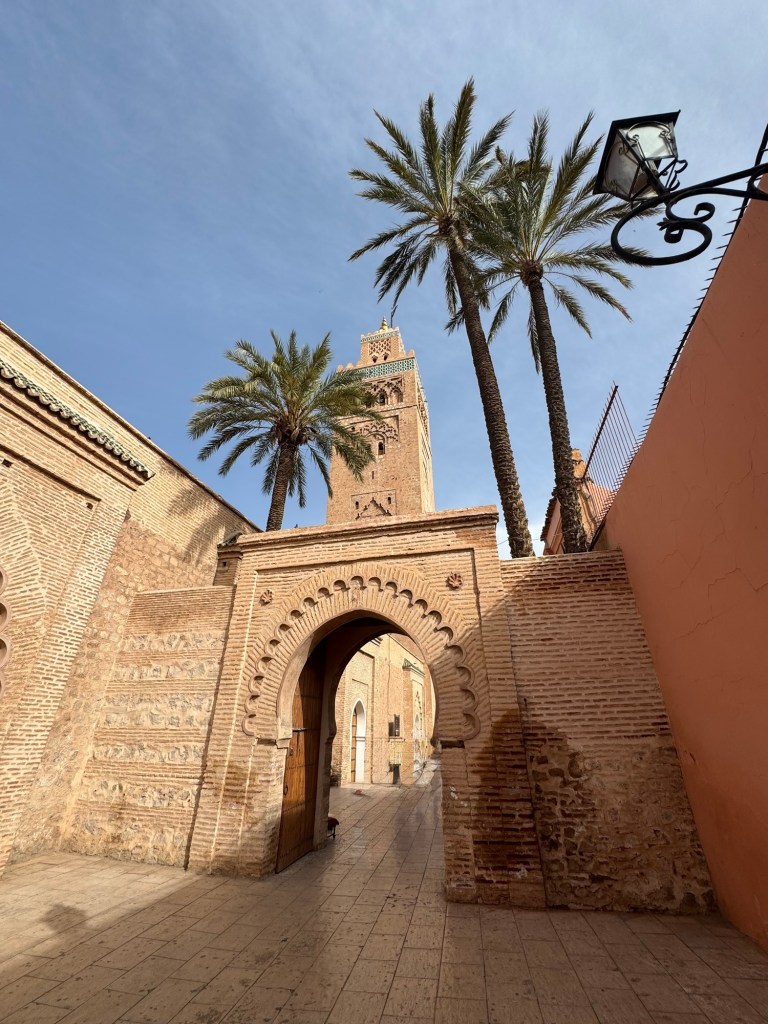
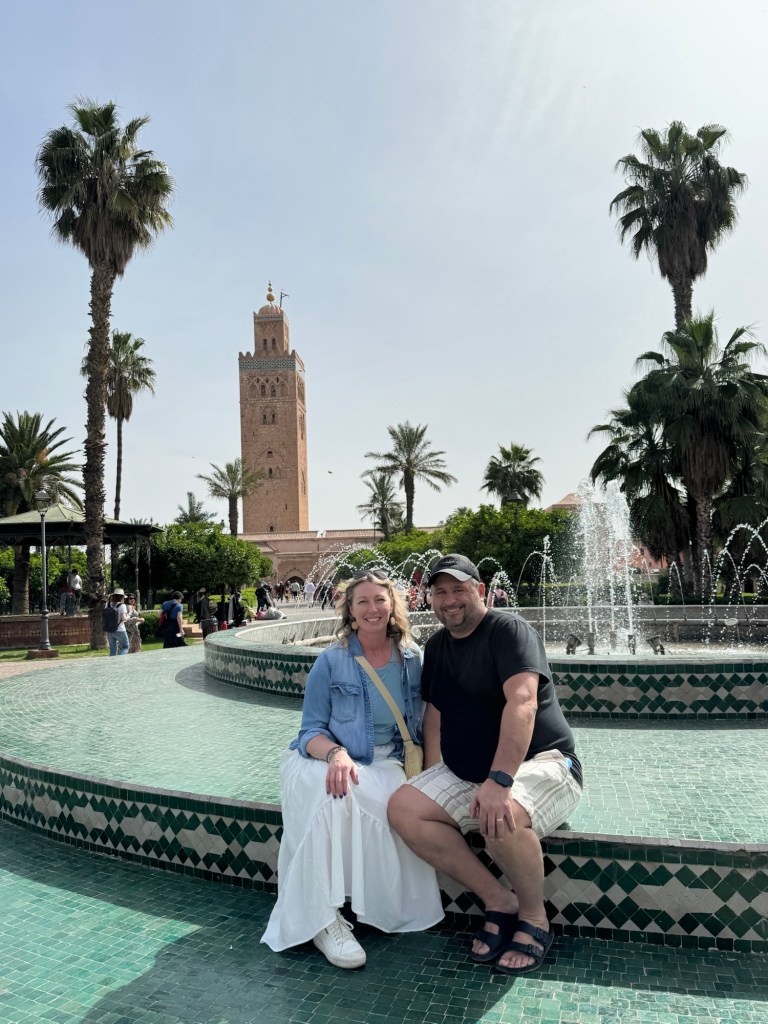
We always try to start a trip to a new location with a free walking tour of the city, which we usually book with Free tours by foot or Guruwalk. After meeting our guide at Koutoubia mosque the first morning, we spent the next 2 hours learning how the city fits together, with our guide front-loading all the context we’d otherwise spend days piecing together — history, customs, what things cost, where to eat, what to skip. It’s tip-based, so it fits our budget travel plans perfectly.
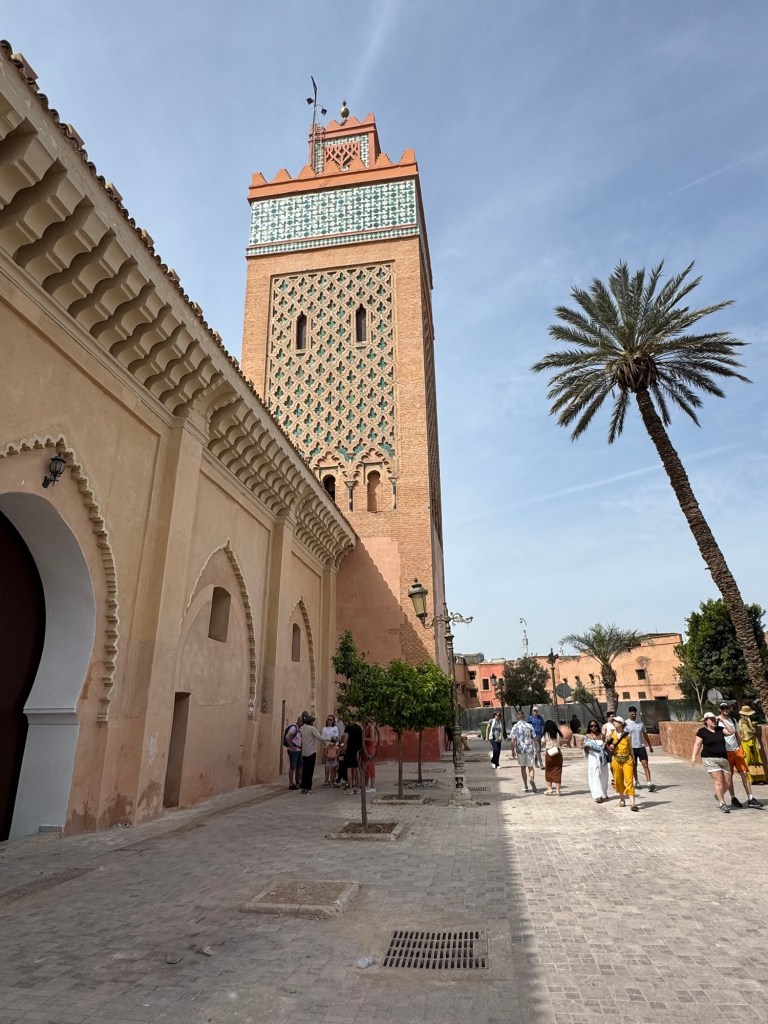
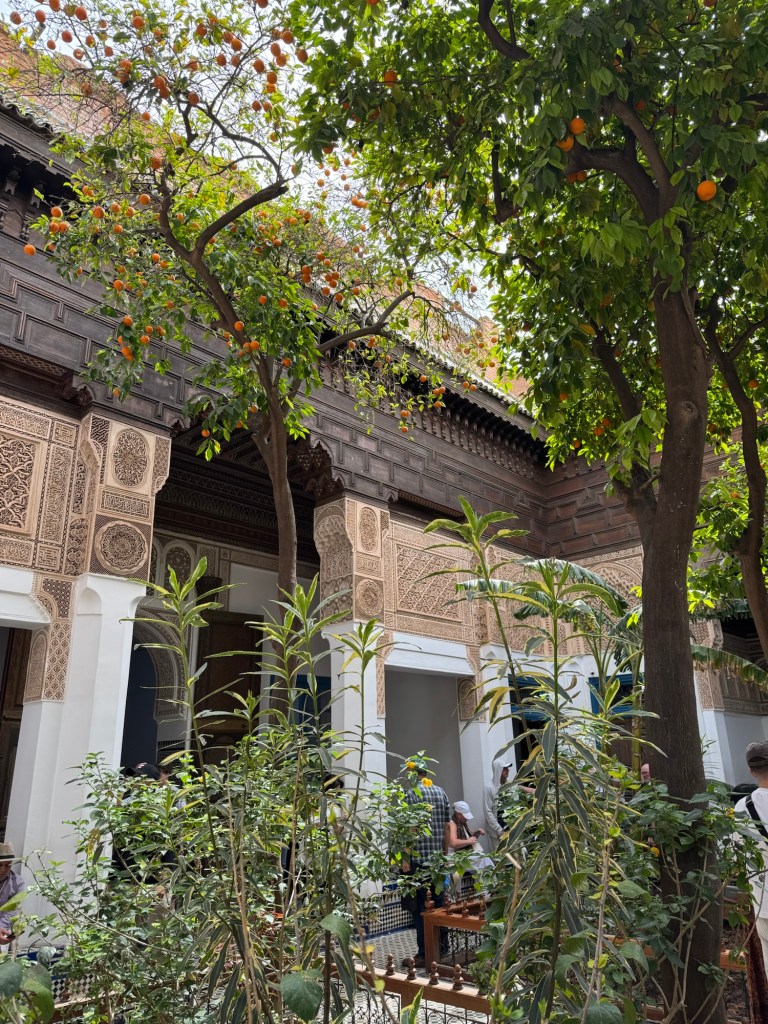
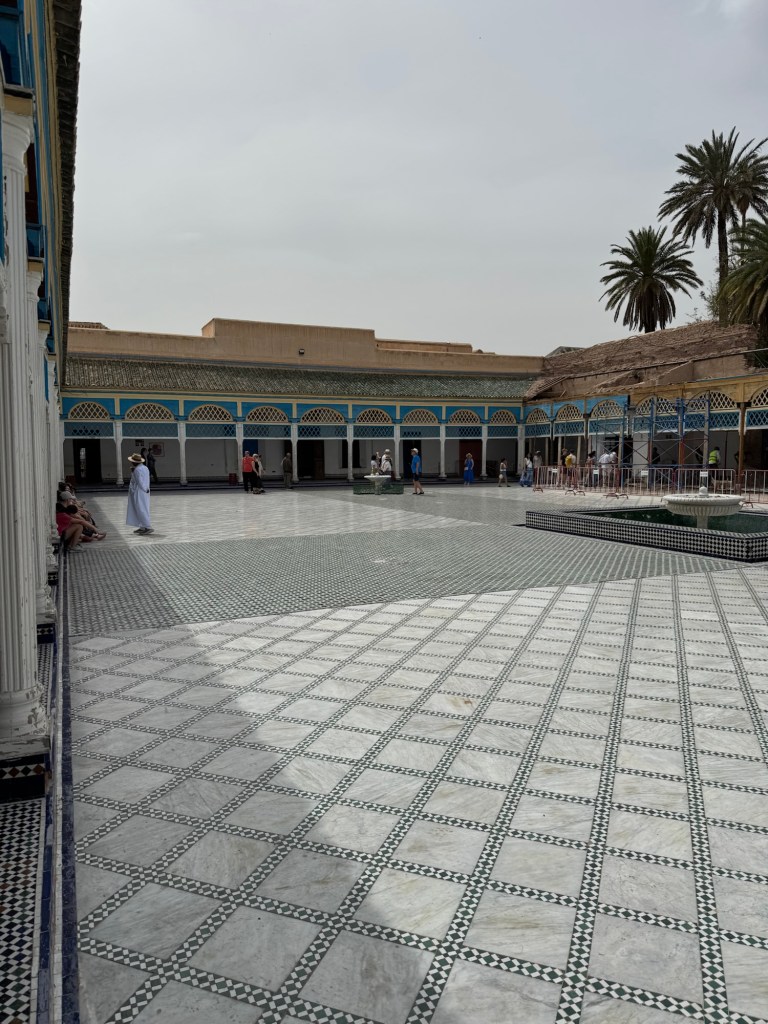
Later that day, we visited Bahia Palace, a 19th-century royal palace built to be the greatest of its time, featuring ornate tilework, carved cedar ceilings, and sprawling gardens. It was a little underwhelming if I’m being honest because it was under construction while we were there. I bet it would be great under normal circumstances, and since it was right around the corner from our riad and the entry price was reasonable at 110 MAD/pp (~$33 CAD total), I was still glad we had gone, despite the construction.
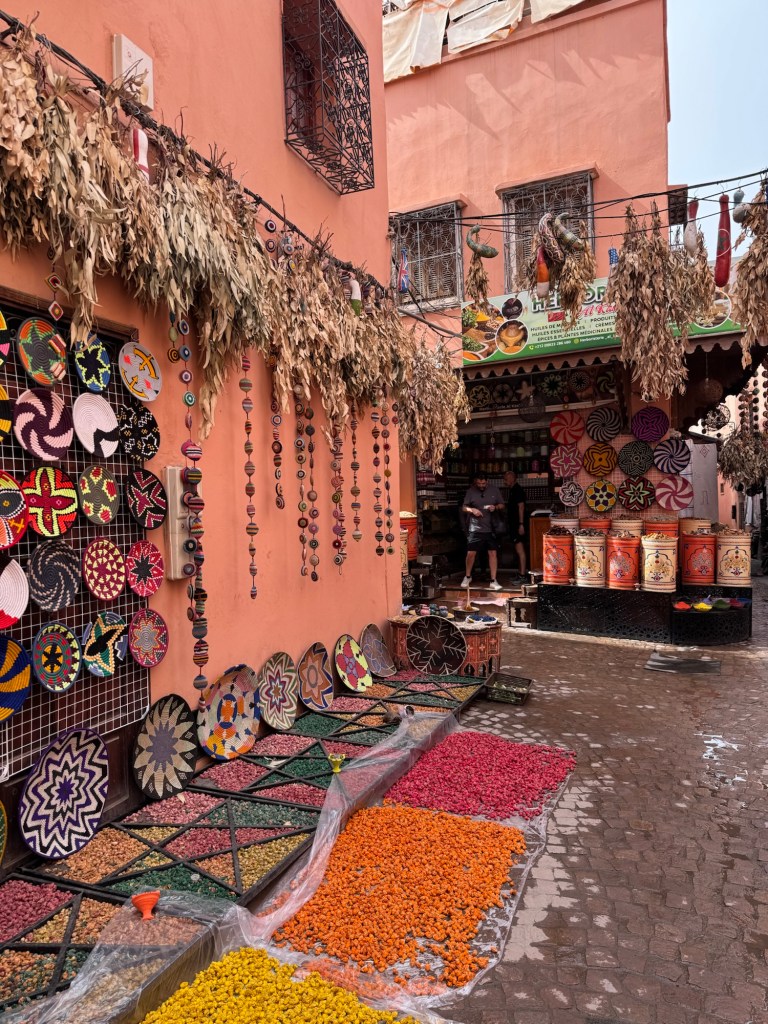
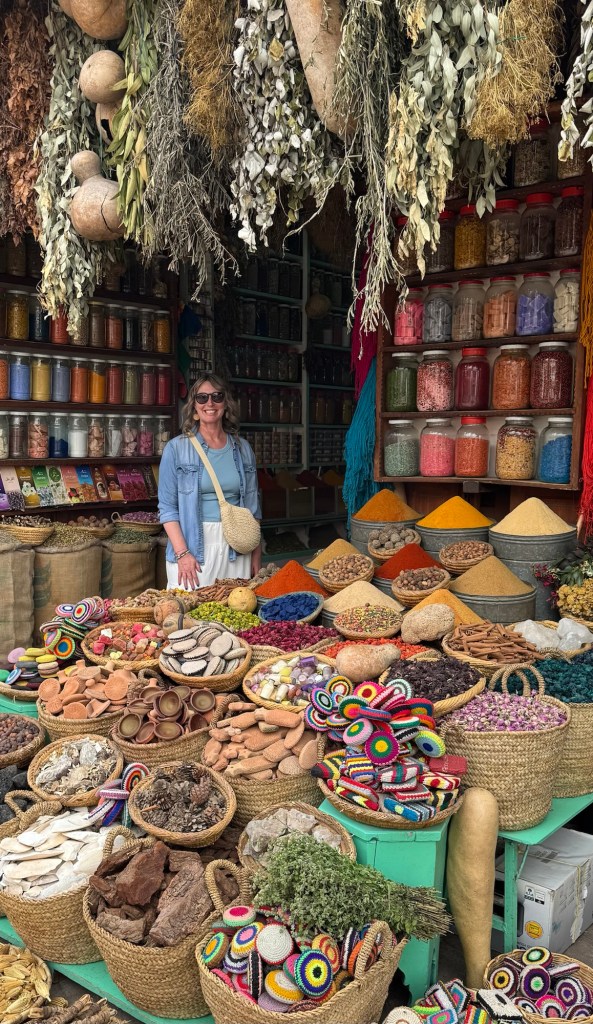
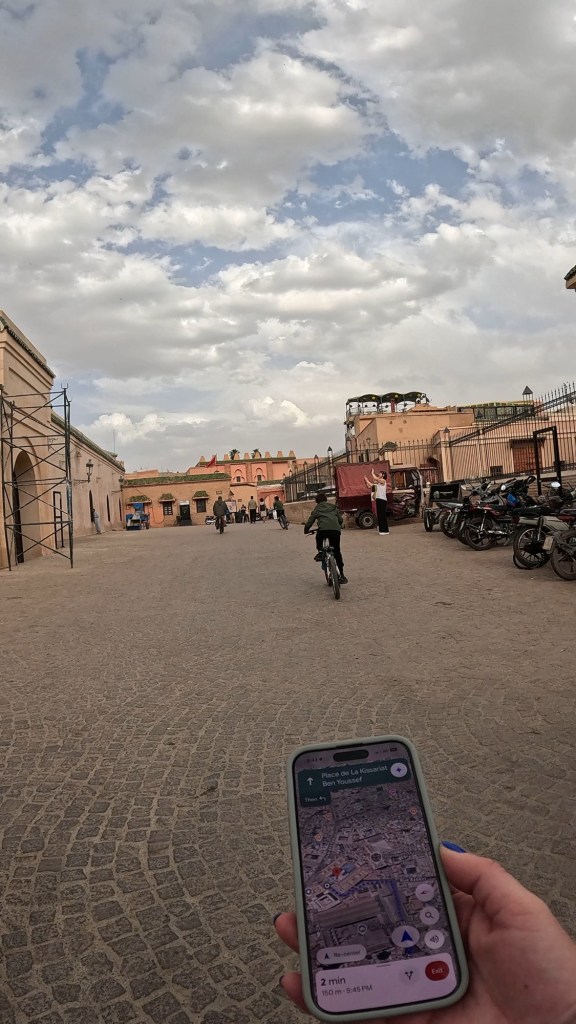
We spent the next 2 days walking the labyrinths of markets and mosques, getting ‘lost’ daily. It was busy, colourful, and sensory overload. The souks (traditional markets) are full of leather goods, spices, ceramics, and textiles. Street food is everywhere. Bargaining is expected in markets, not optional. You run the risk of being run over by mopeds, donkeys, carts or bicycles at any given time. Being on high alert at all times is a must! Marrakech, specifically the old town in the medina, is truly an assault on the senses, in the best way possible.
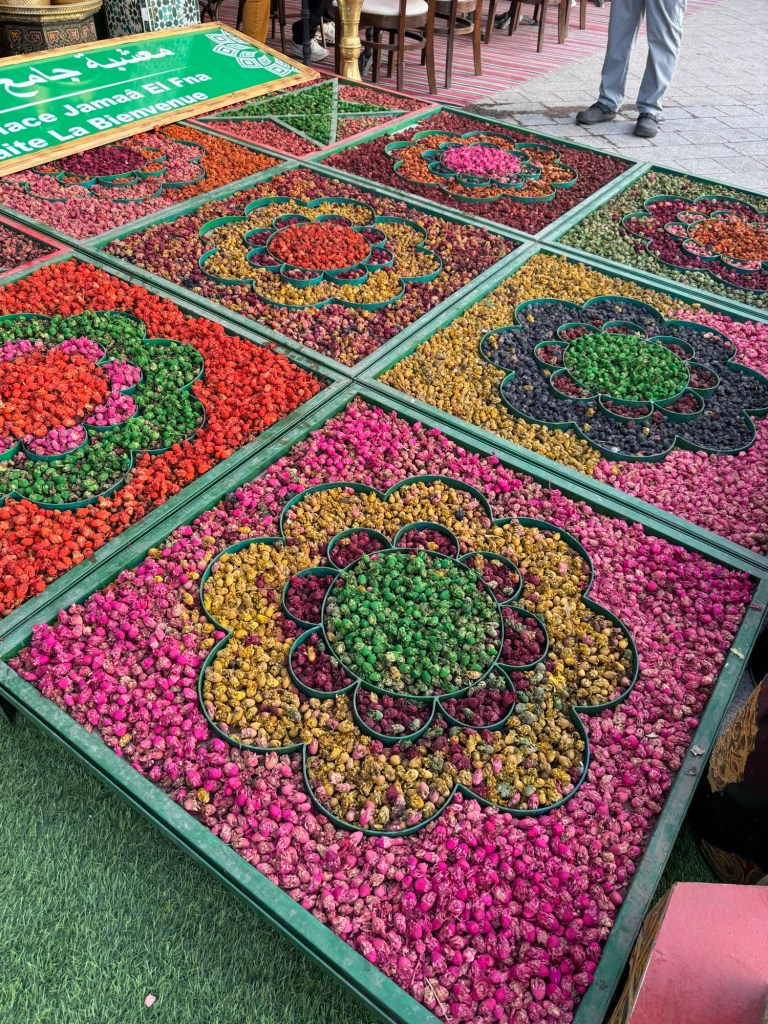
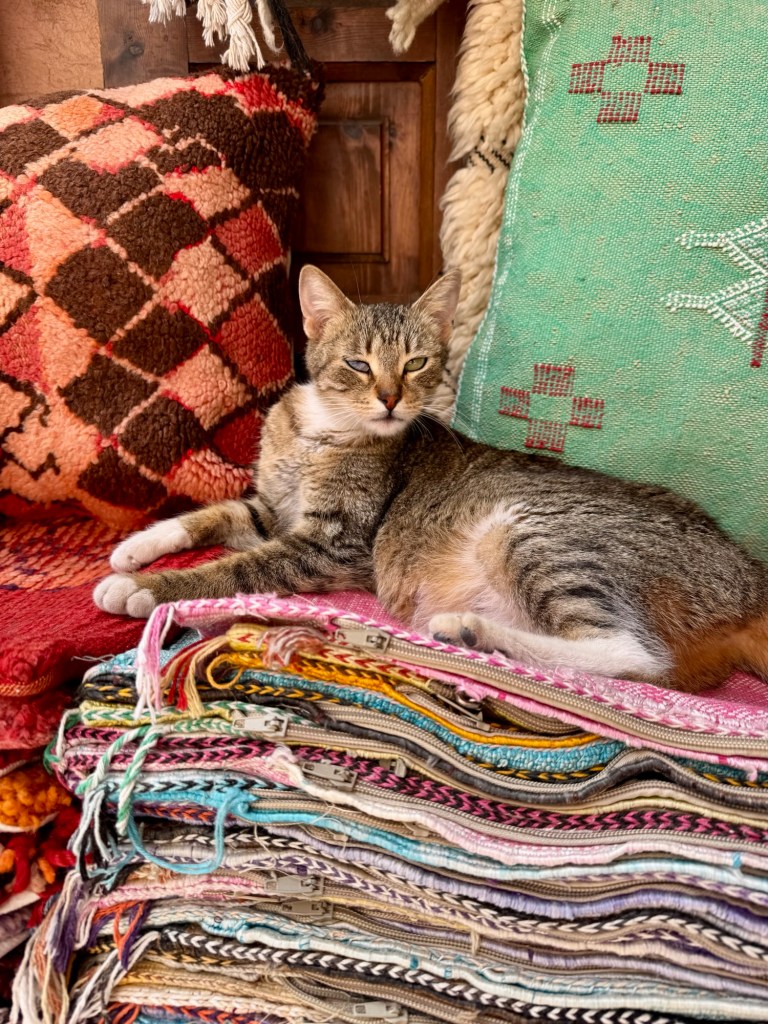
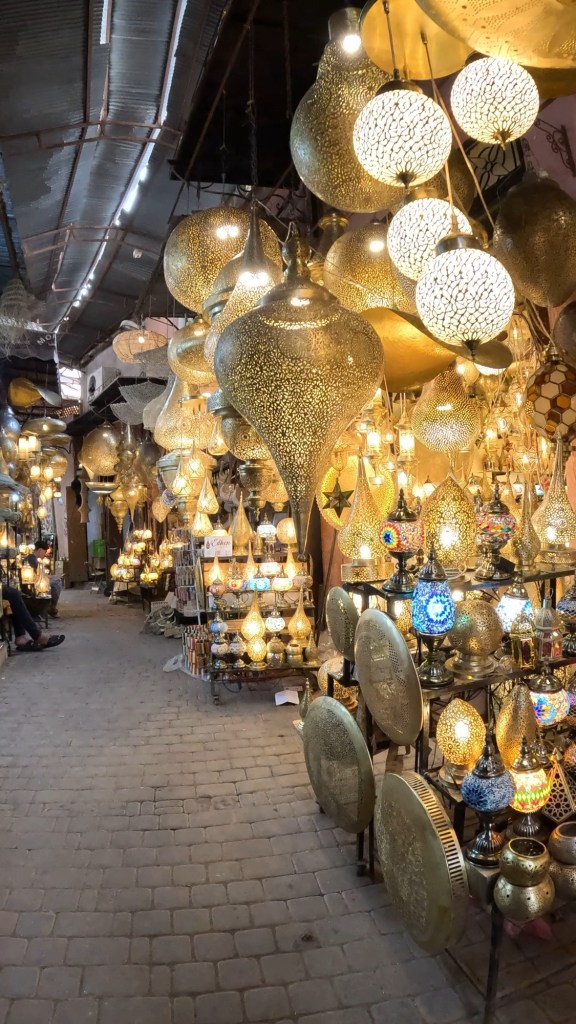
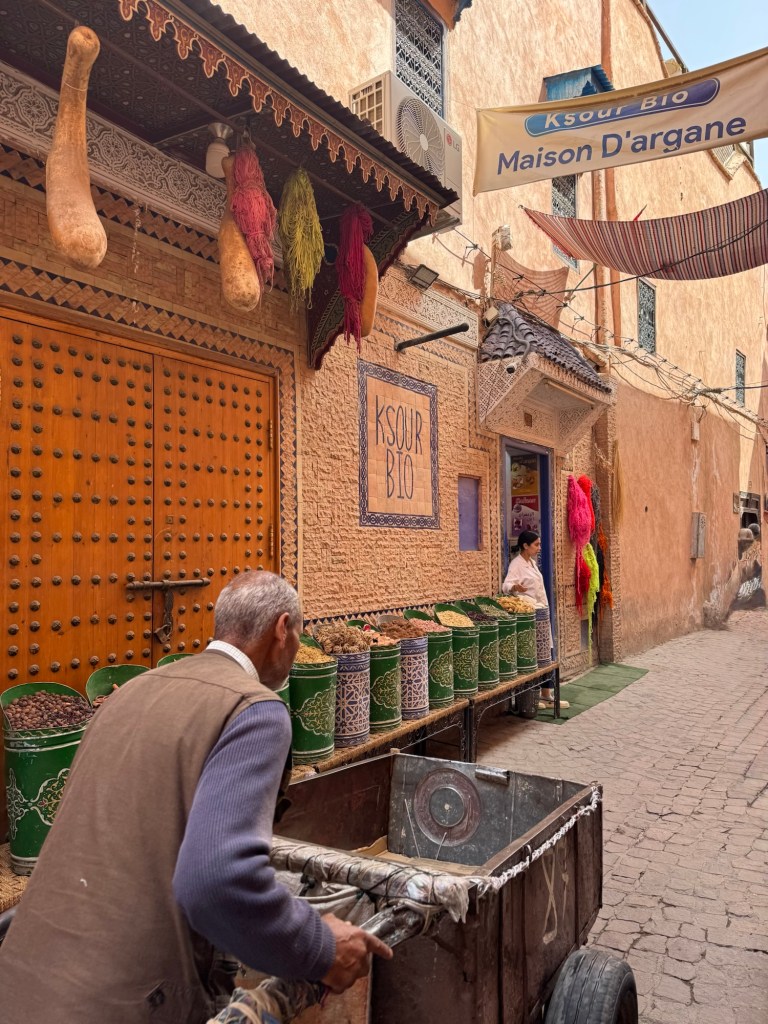
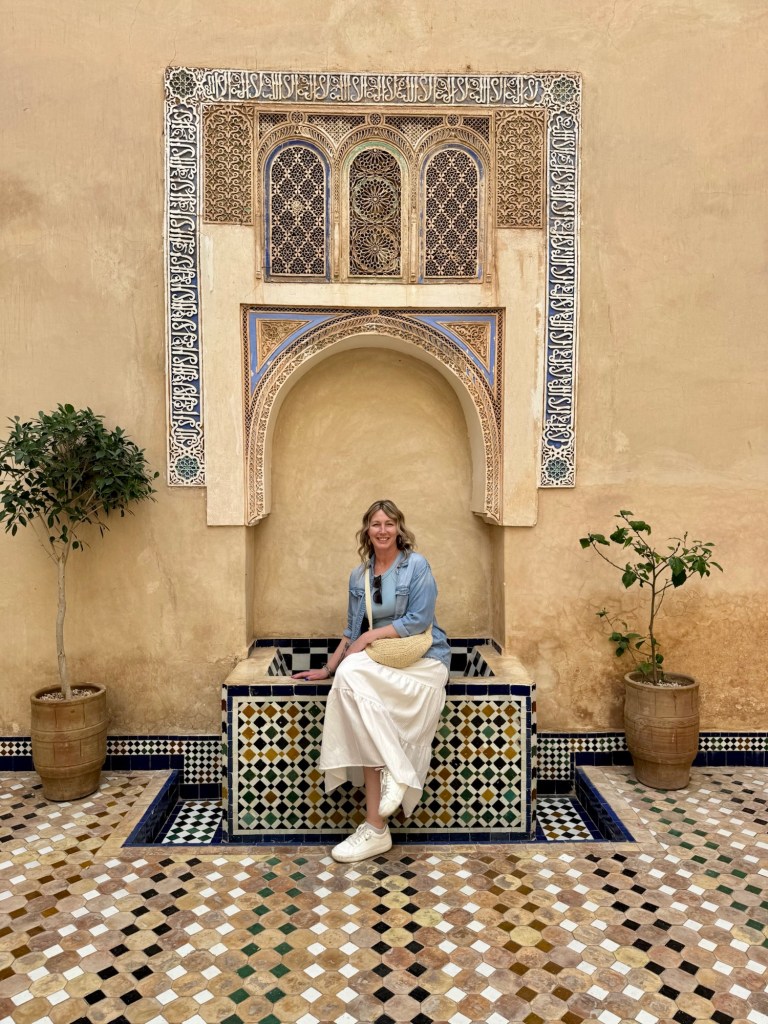
Our favourite site was Ben Youssef Madrasa, a stunning 14th-century Islamic school, covered floor-to-ceiling in intricate mosaic tiles, carved stucco, and cedar wood — one of the most architecturally breathtaking buildings in all of North Africa. At only 50 MAD/pp for an entry fee ($15 CAD total), it was a no brainer. It’s also centrally located in the medina and easily accessible by foot. If you do nothing else in Marrakech, do this! We almost skipped it because we were exhausted from walking on average 26K steps a day. So glad we didn’t!
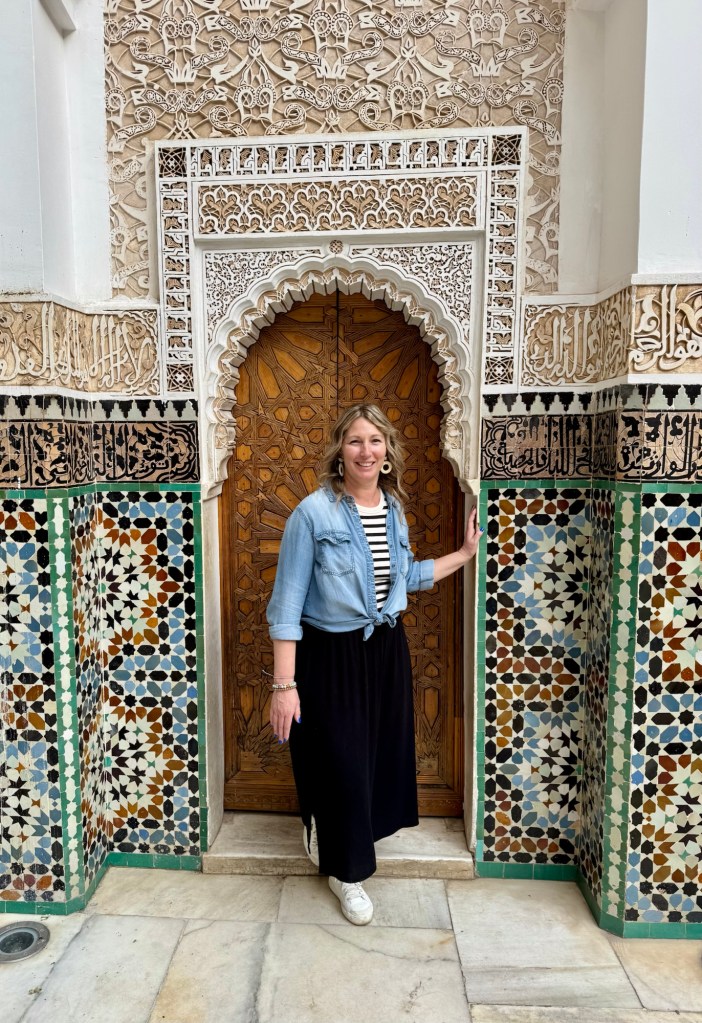
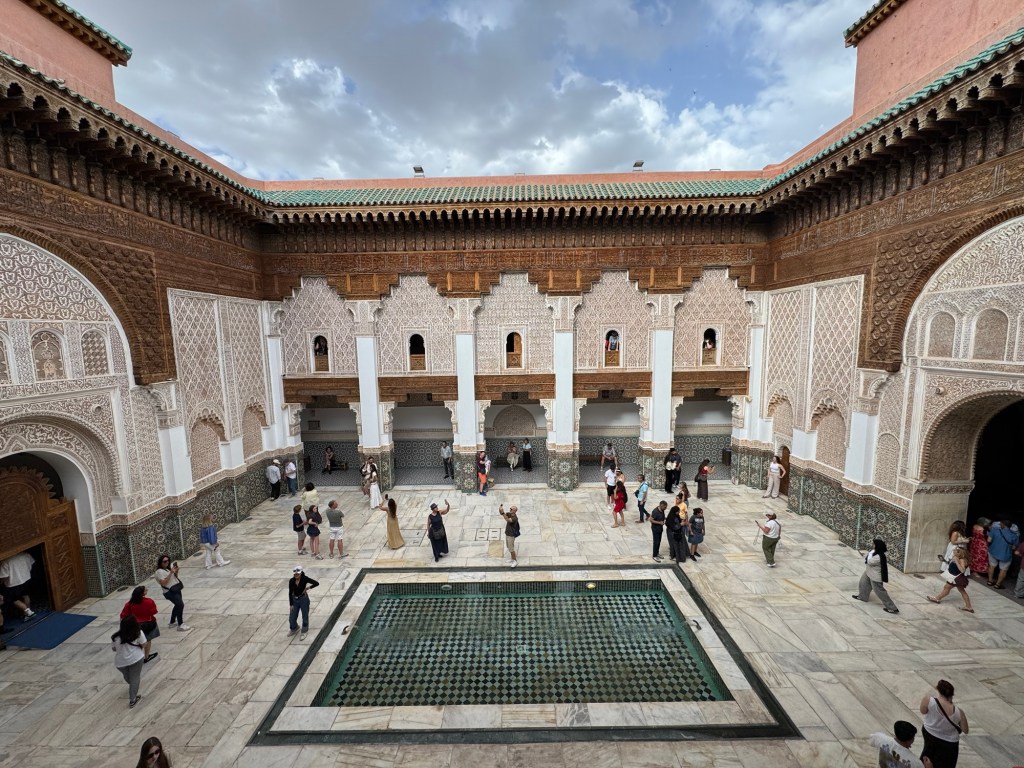
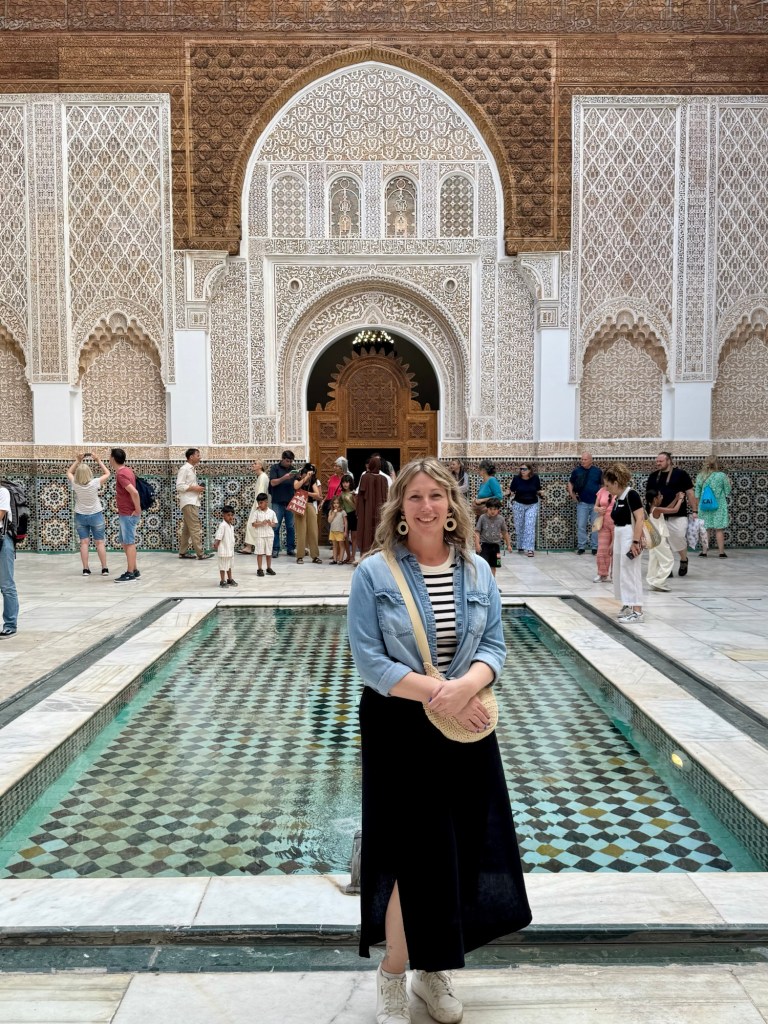
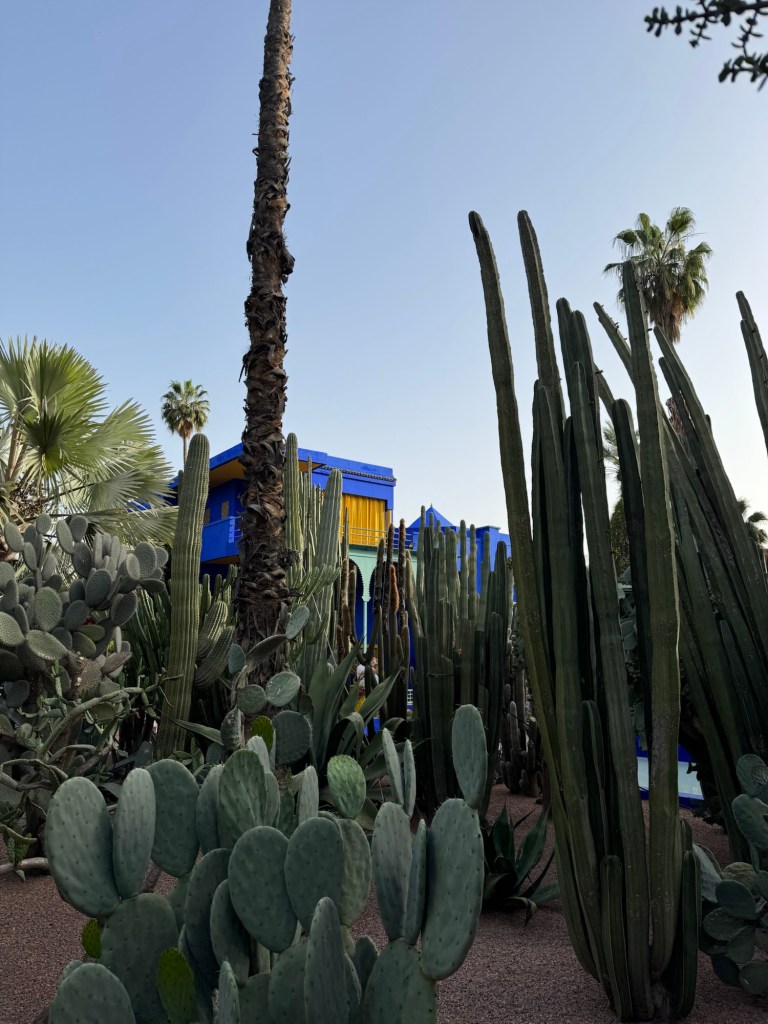
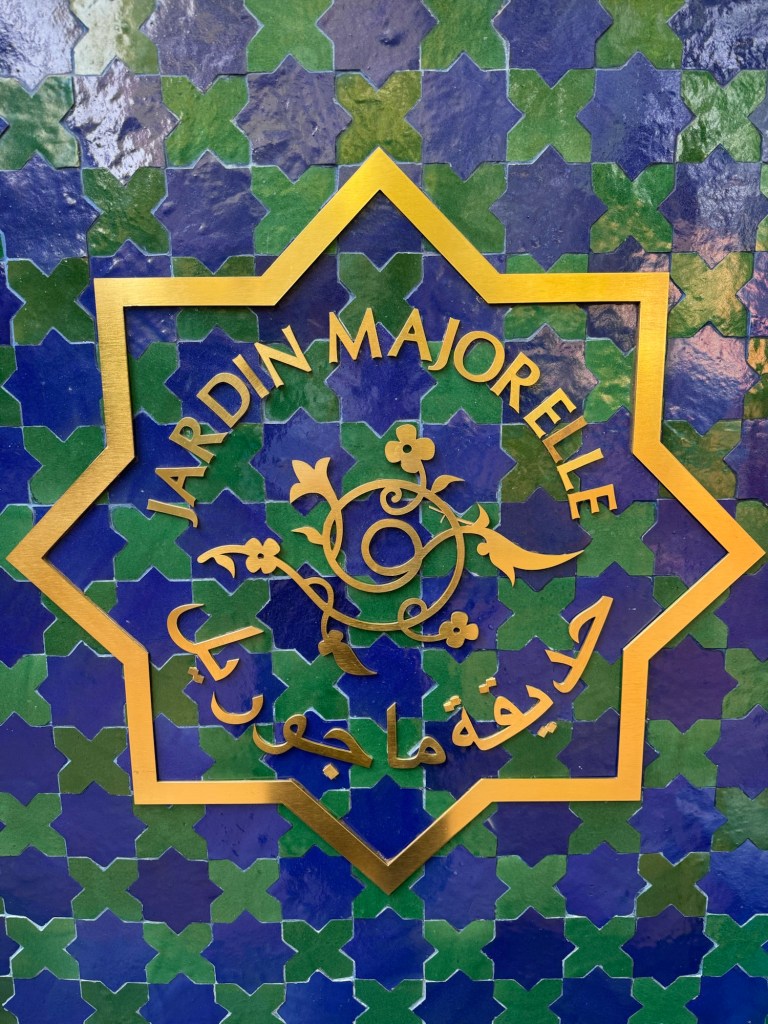
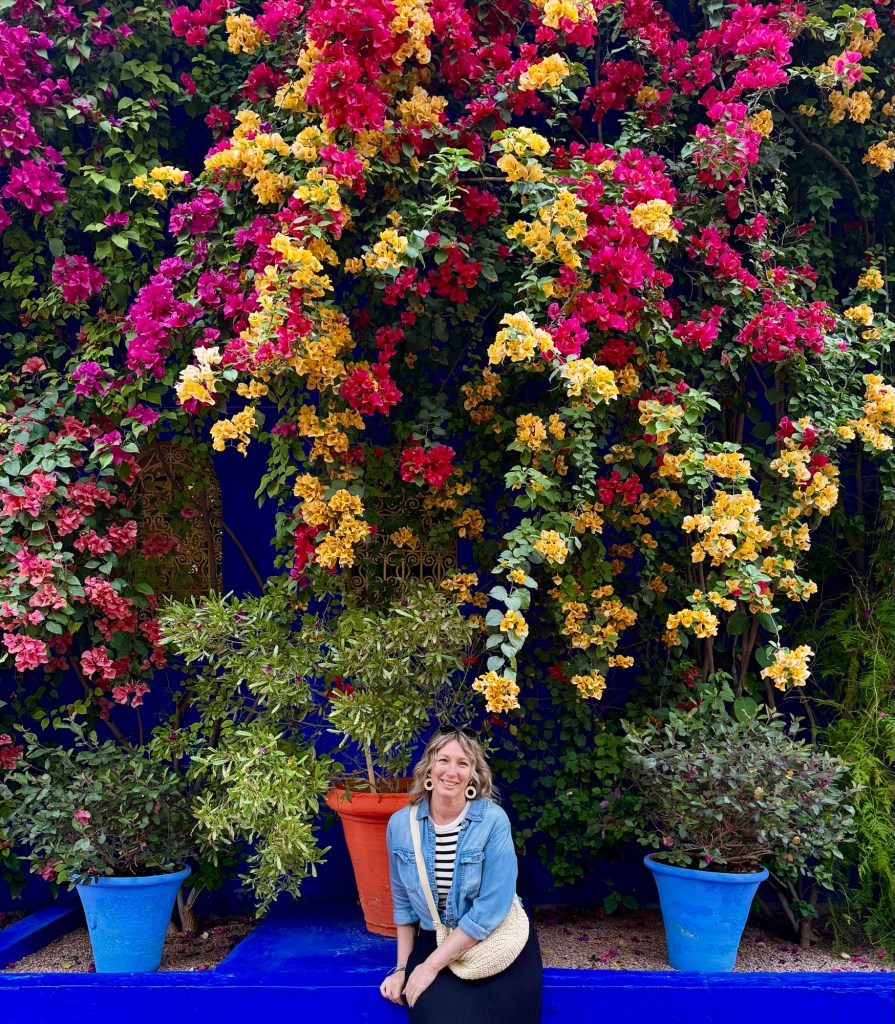
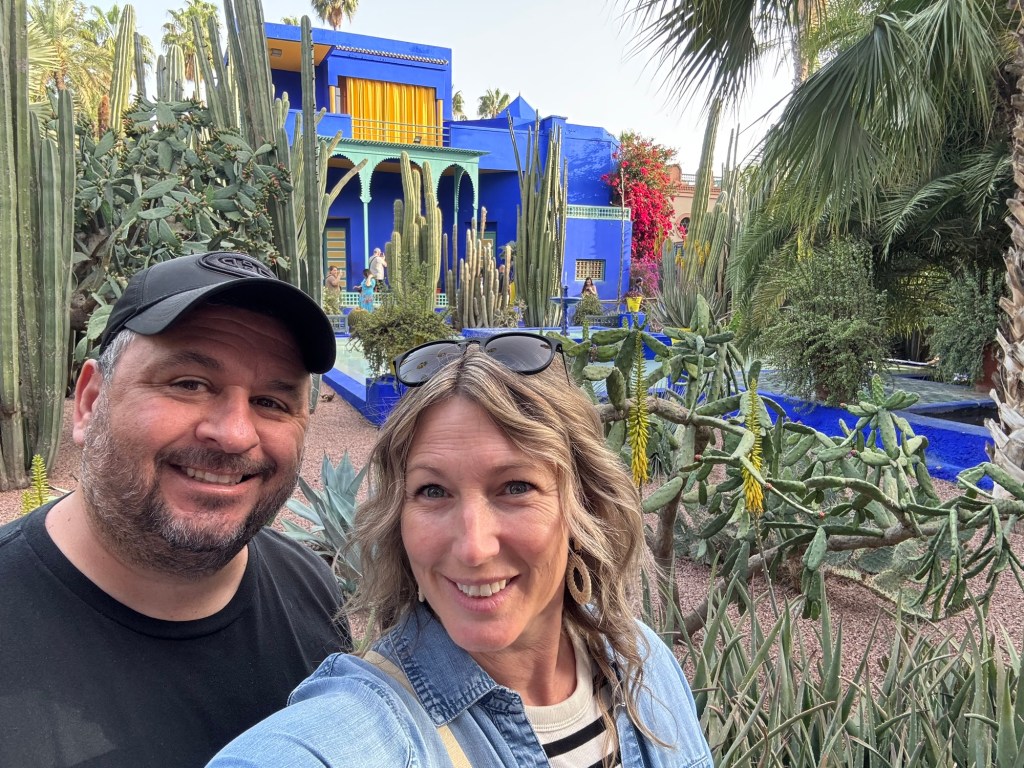
We also visited Jardin Marjorelle, a vivid, dreamlike botanical garden famous for its electric blue buildings and exotic plant collection, once owned by Yves Saint Laurent and now one of the most photographed spots in Morocco. While it was beautiful, it was a good distance from where we were staying so it required a 120 MAD taxi ride ($18 CAD) and a long walk back, and was the most expensive in terms of entry fees 170 MAD/pp ($50 CAD total). Don’t get me wrong, the pictures are stunning, I’m just not sure it was the most authentic of experiences unless you’re chasing photos for Instagram.
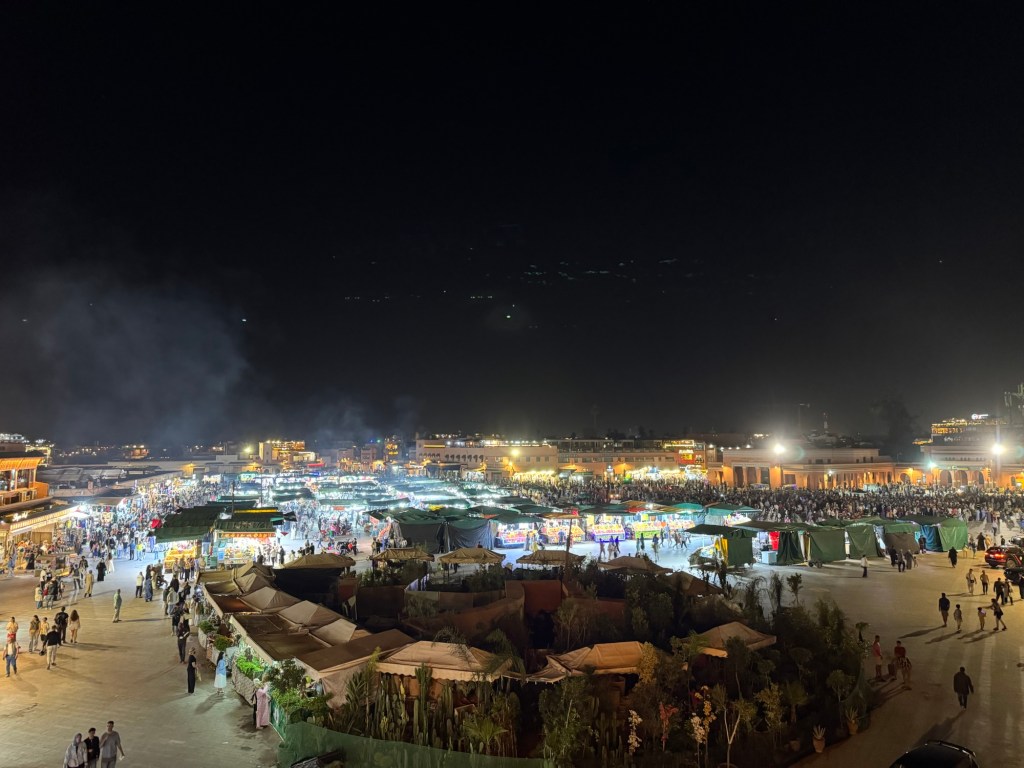
One of the highlights of Marrakech is the legendary Jemaa El Fna square that transforms nightly into an overwhelming, exhilarating circus of food stalls, snake charmers, storytellers, musicians, and incense smoke that you genuinely have to experience to believe. Many restaurants have rooftop patios that overlook the square. While these are more touristy in nature, it certainly is the perfect spot to watch that market come to life at sunset. We especially enjoyed a meal at Chez Chegrouni on our first night and La Pergola on our last night. We would gravitate to the square each evening, just to take in the sights and sounds.
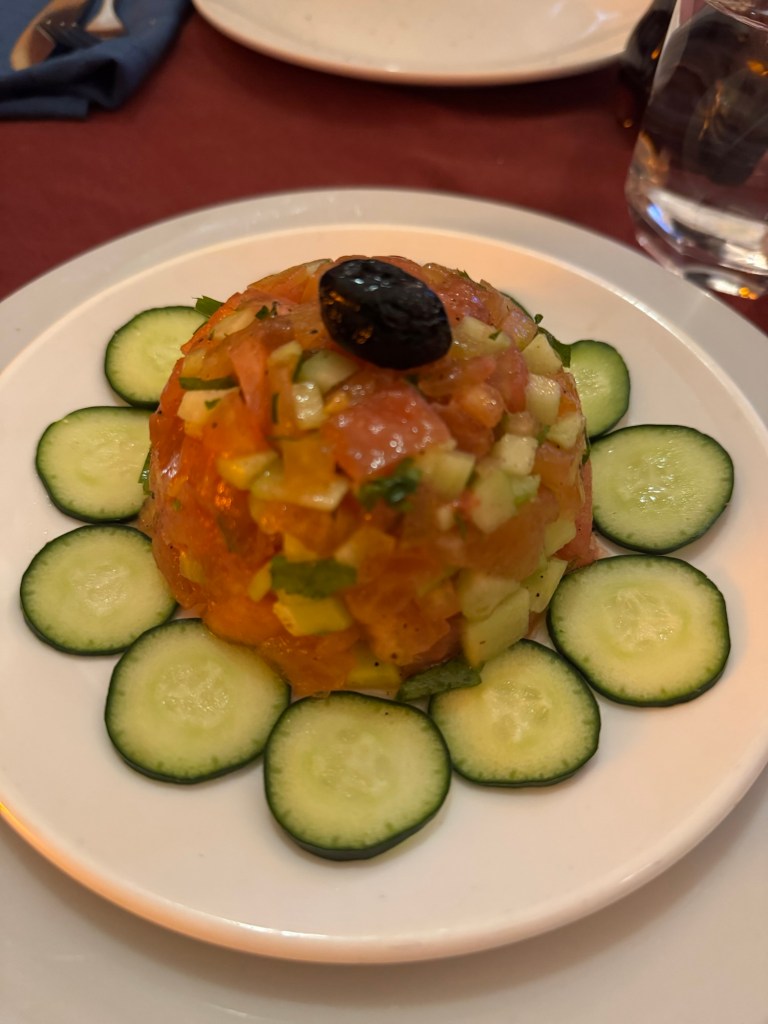
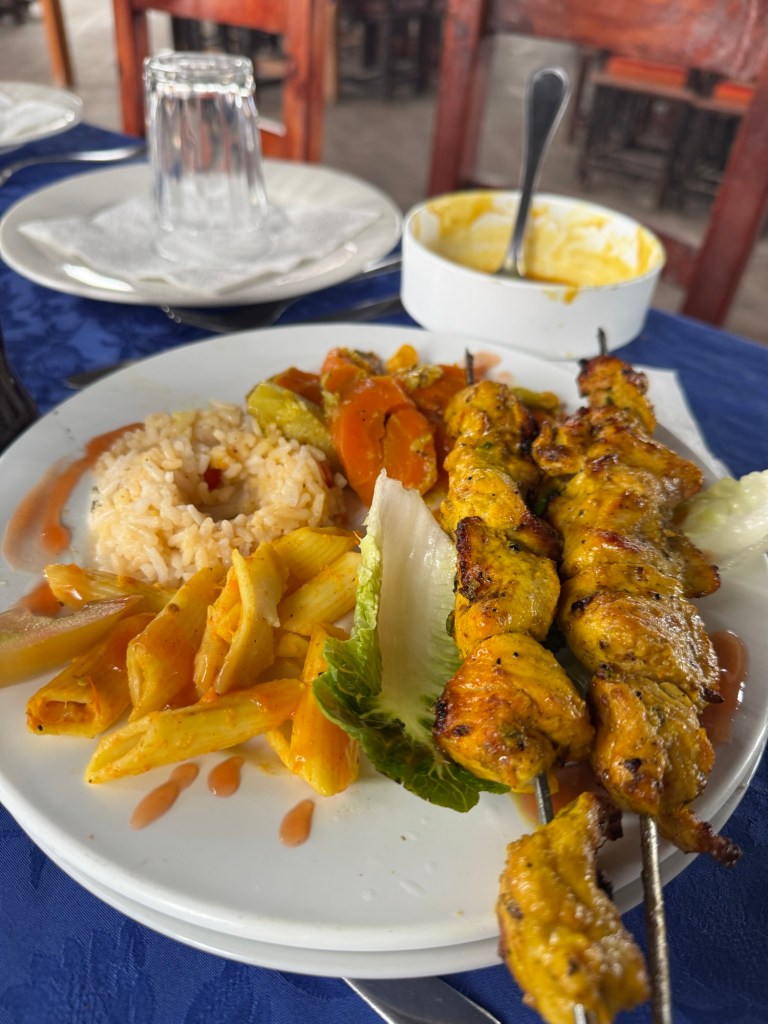
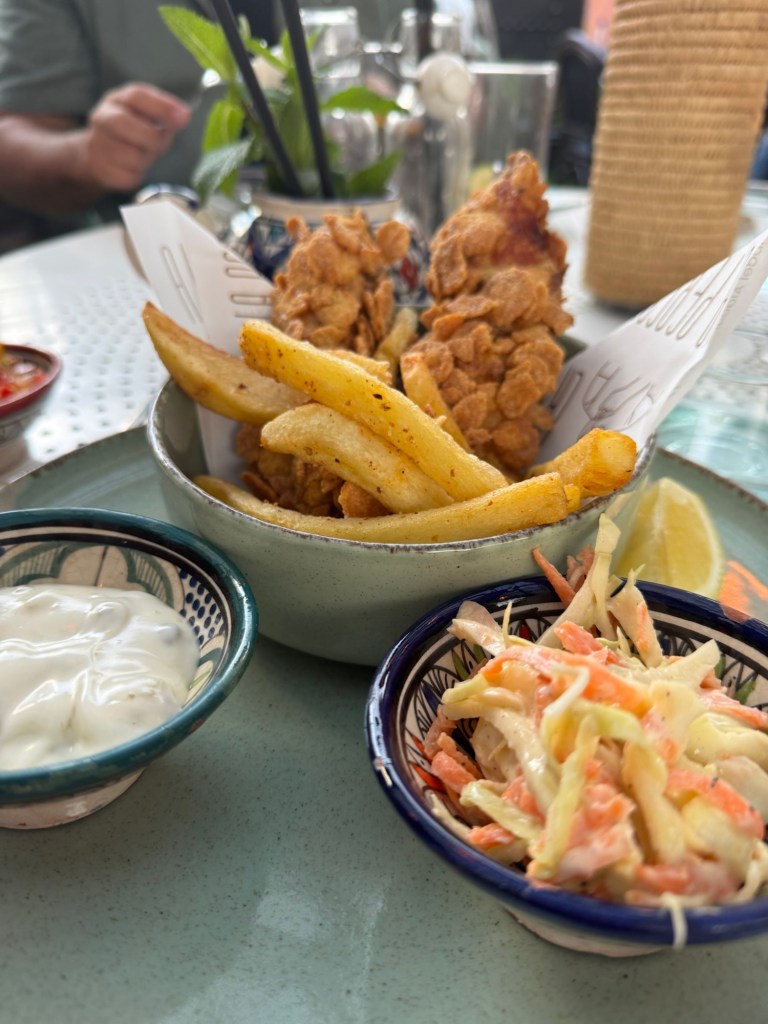
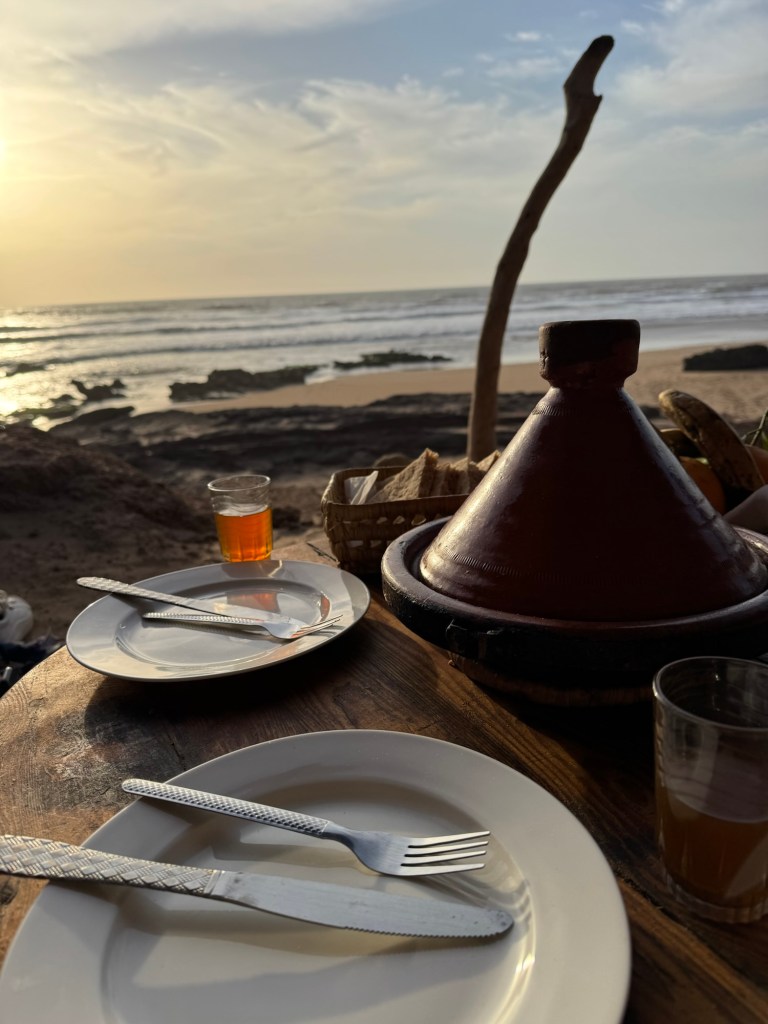
The food in Morocco was a big surprise for me. My husband is a picky eater, and I don’t like spicy food, so we were both a bit concerned before visiting. I’m happy to report that the food was delicious, and while the food was spiced, it was not spicy. The flavours were incredible, and there were always basic options for my husband to choose from. Tagine, a slow-cooked Moroccan stew — typically meat or vegetables braised with warm spices like cumin, cinnamon, and ginger — named after the conical clay pot it’s cooked and served in appears on almost every menu. Meat skewers are also very popular (and super tasty!). We really enjoyed chicken pastilla as well, a flaky pastry pie filled with spiced chicken, almonds, and eggs, traditionally dusted with powdered sugar and cinnamon. It sounds strange but tastes incredible.
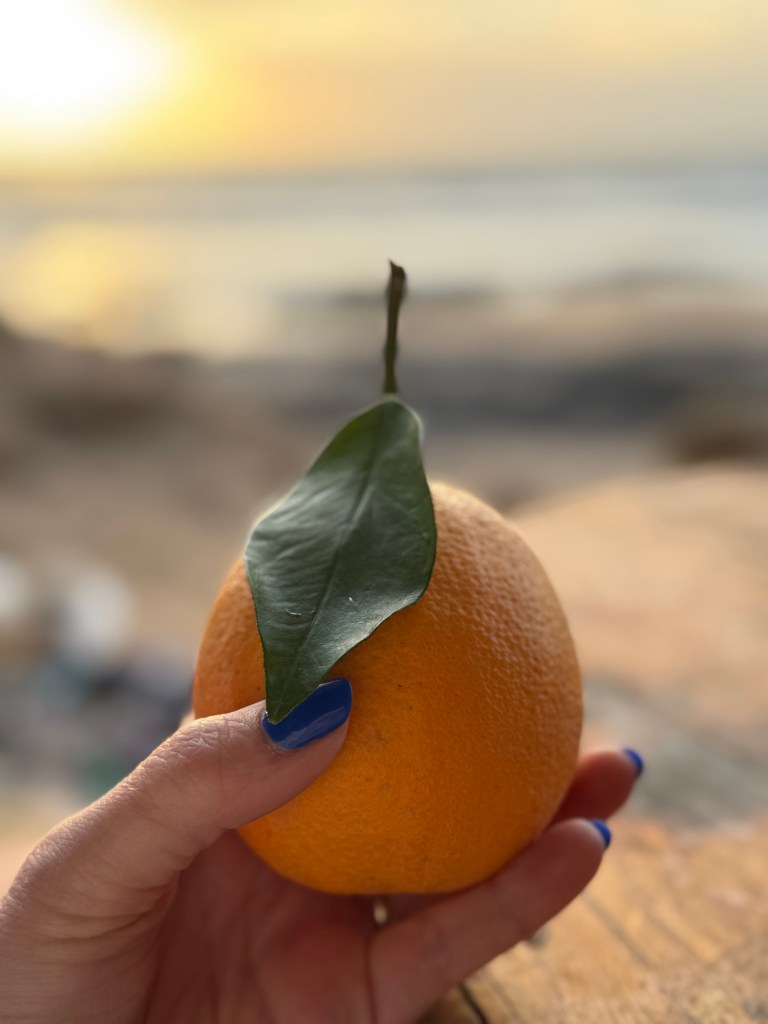
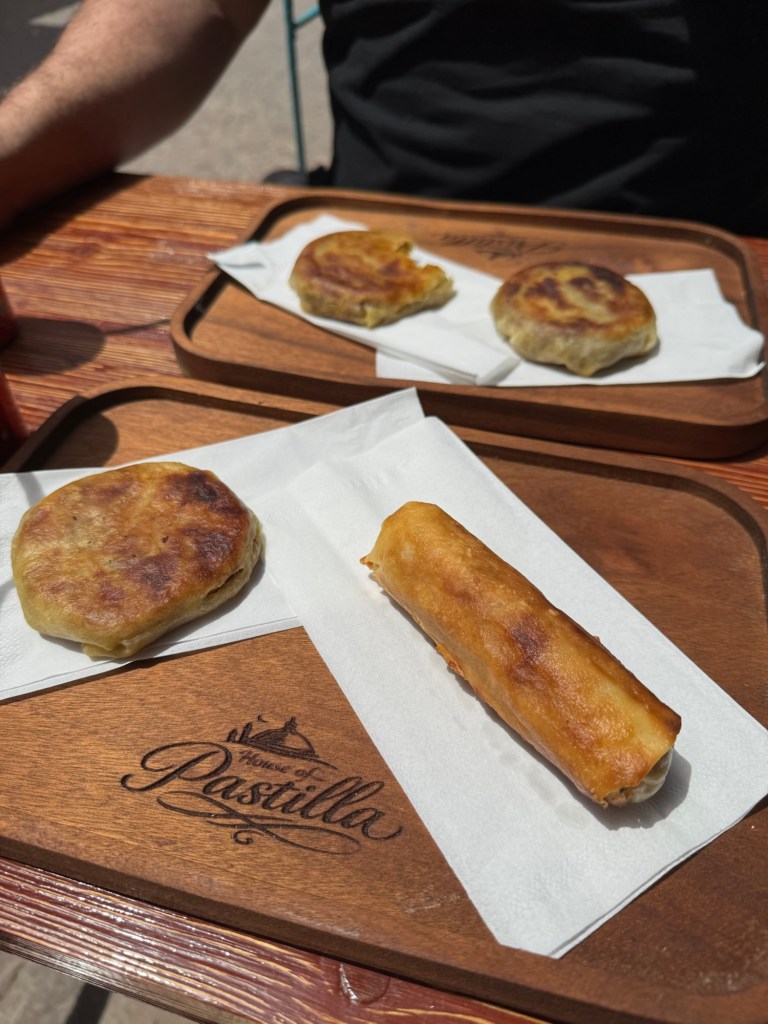
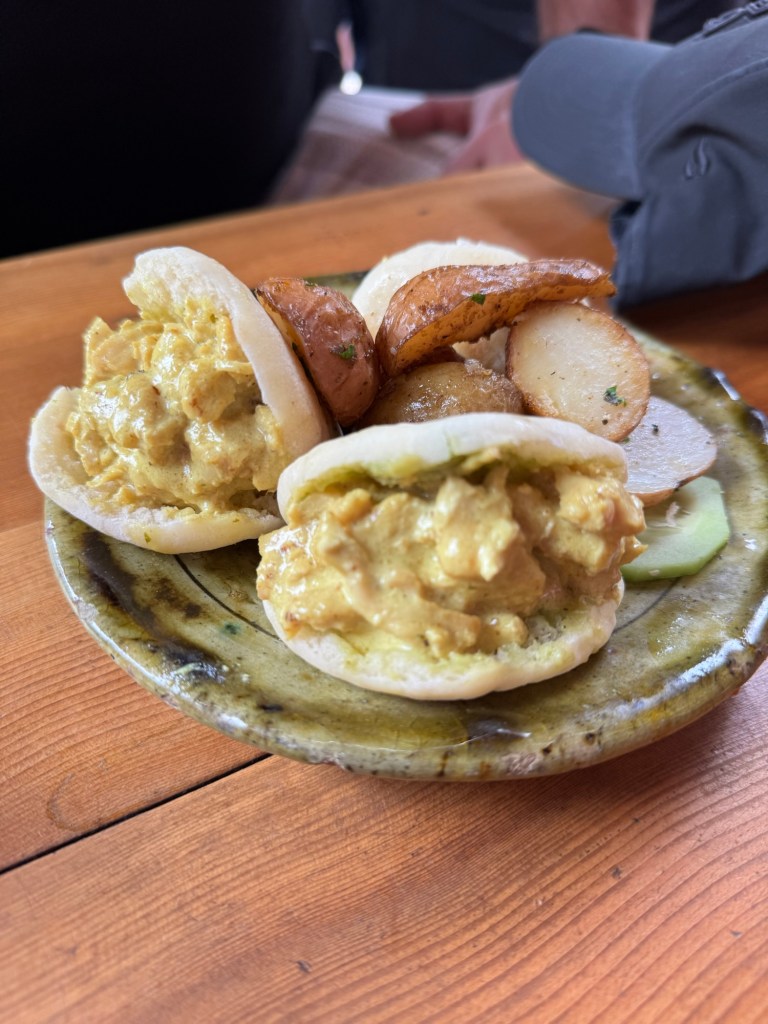
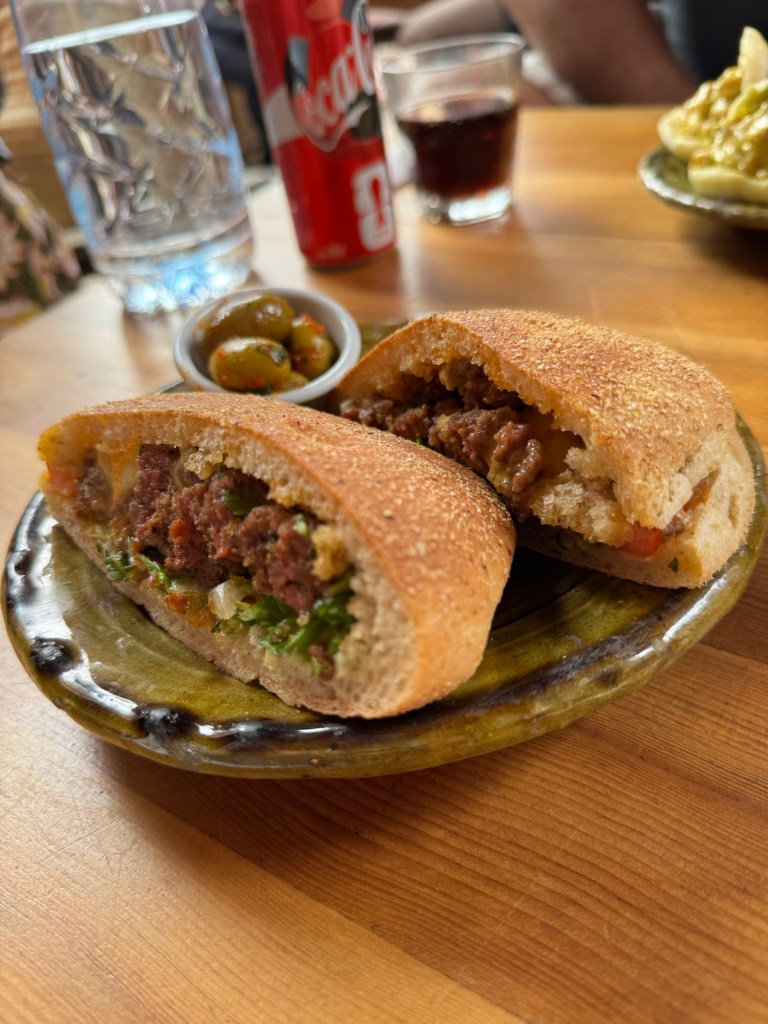
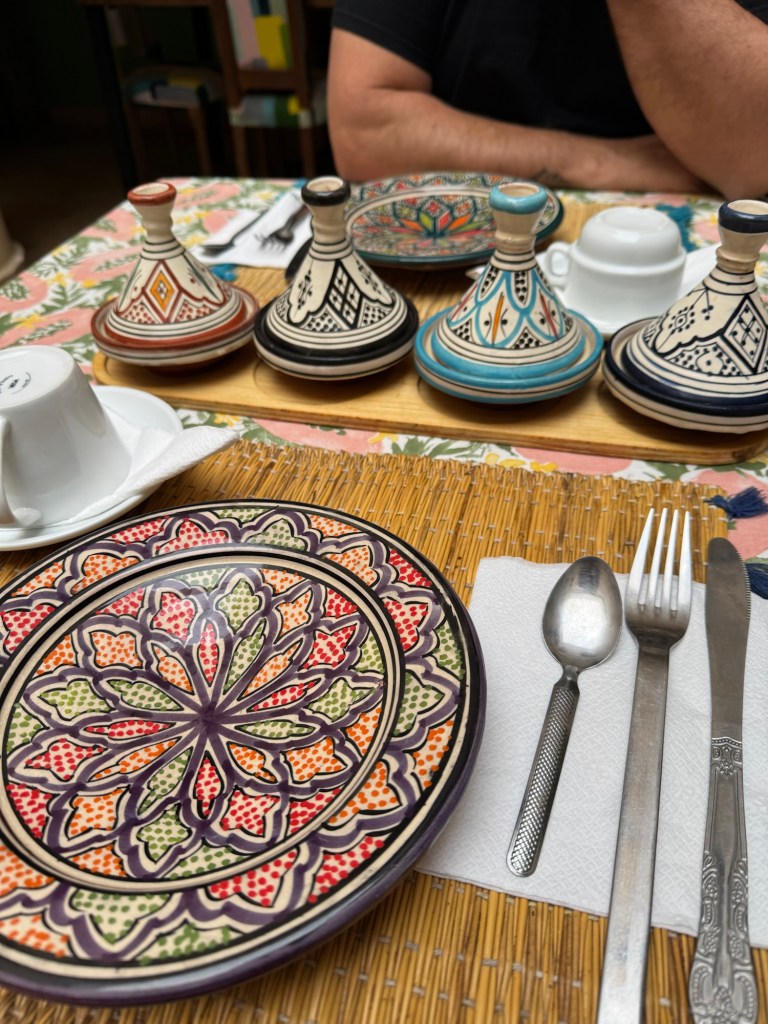
Breakfast was all about the carbs. Fresh bread, mini pancakes, msemen (flaky pan-fried flatbread), amlou (nutty Moroccan spread made from toasted almonds, argan oil, and honey), honey, jam, fresh pressed orange juice, yogurt and fruit, and always a pot of sweet mint tea or coffee. Many riads include breakfast as part of your nightly room rate, and it was nice to sit in the courtyard and indulge in all that delicious goodness before setting off for the day. If we were pressed for time, we’d find a lady grilling up some fresh msemen on the streets, which you could top with Nutella or honey.
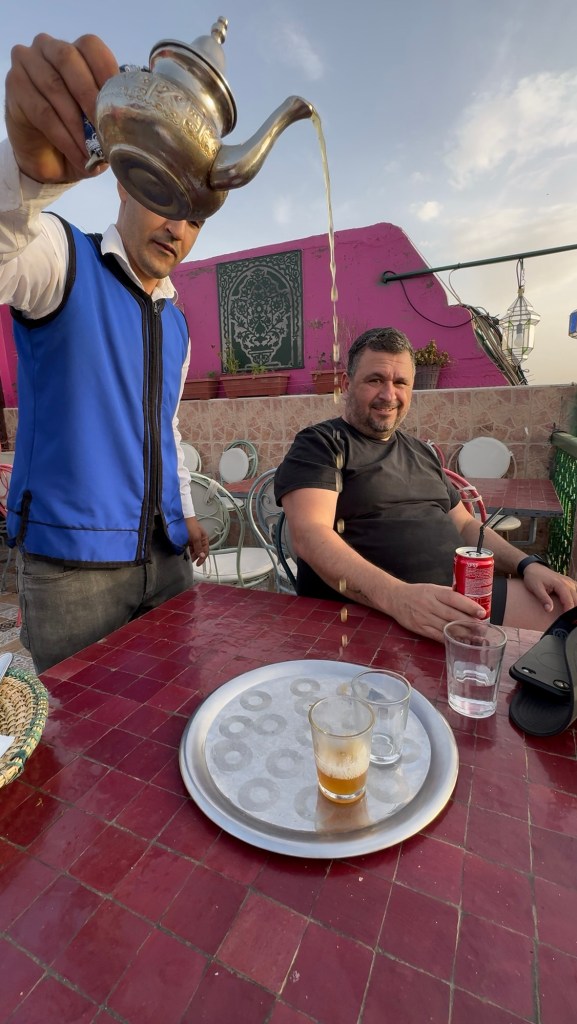
Mint tea is practically a social institution in Morocco. The tea is brewed strong, packed with fresh spearmint, and sweetened with a healthy dose of sugar. It’s poured from a height to create a froth on top, and that theatrical pour isn’t just for show — it aerates the tea and is considered part of the ritual. You’ll be offered it constantly, in shops, in riads, for breakfast and after meals. It’s served in small ornate glasses, always hot, and always sweet if you’re not used to it — but it grows on you fast. Refusing is considered impolite, so as a non coffee or tea drinker, I was worried that I’d have to force it down.
Truth is, I loved it, and hurried to buy a teapot, some gunpowder green tea and started growing fresh mint at home within days of being home. The souvenir cups I brought home bring me joy every time I enjoy a tea at home. For budget travellers it’s worth knowing that sitting down for tea at a café is one of the cheapest ways to take a break and watch the world go by.
Merzouga/Sahara Desert
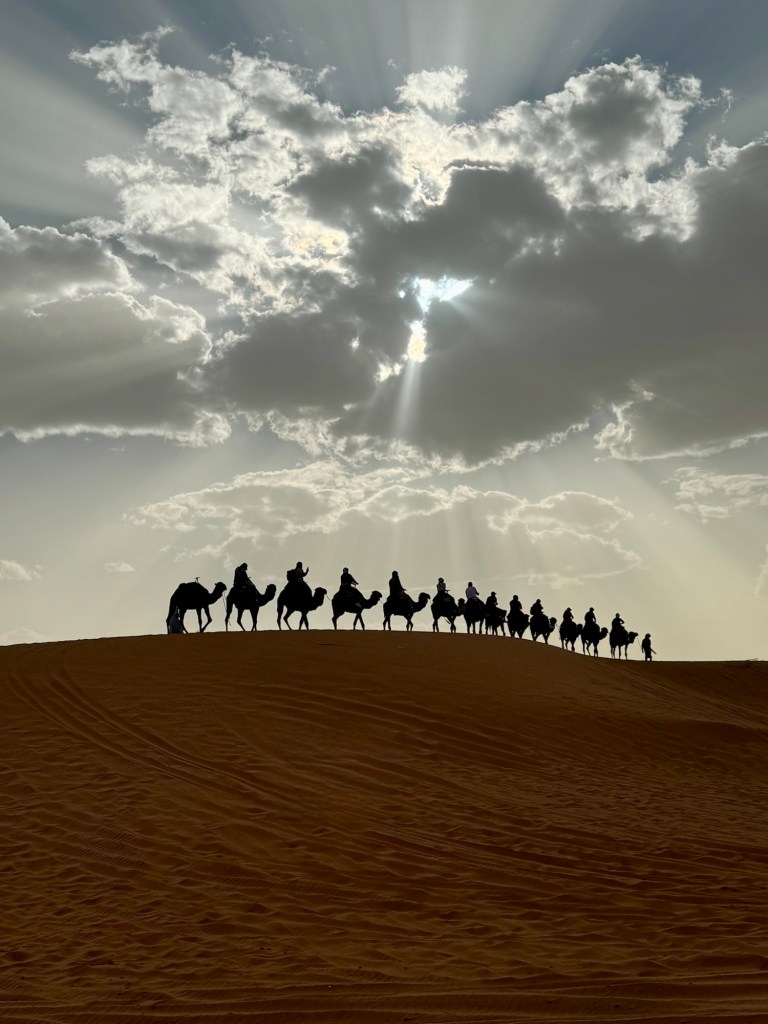
The highlight of this trip was the 3-day excursion we took to ride camels and overnight in the Sahara desert. I booked this through Viator, which I use for most of my tours while travelling. It started early on day 1 with a pickup near our riad and we immediately headed east towards the desert. Within an hour we were climbing the winding roads up the Atlas Mountains, with far-reaching views across the landscape.
We eventually made it to the Ait Ben Haddou, a breathtaking ancient fortified village rising out of the southern Moroccan desert like something from another world. A local guide led us through the UNESCO World Heritage Site built entirely from mud, clay and straw that has appeared in so many films and TV shows (Gladiator, Game of Thrones).
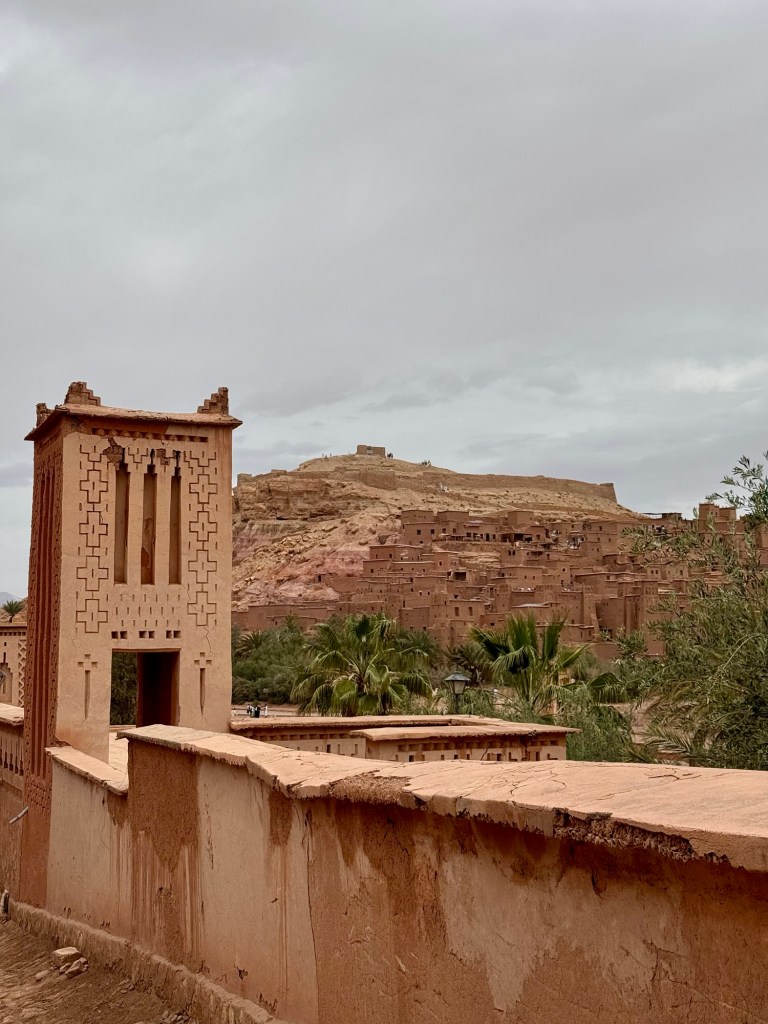
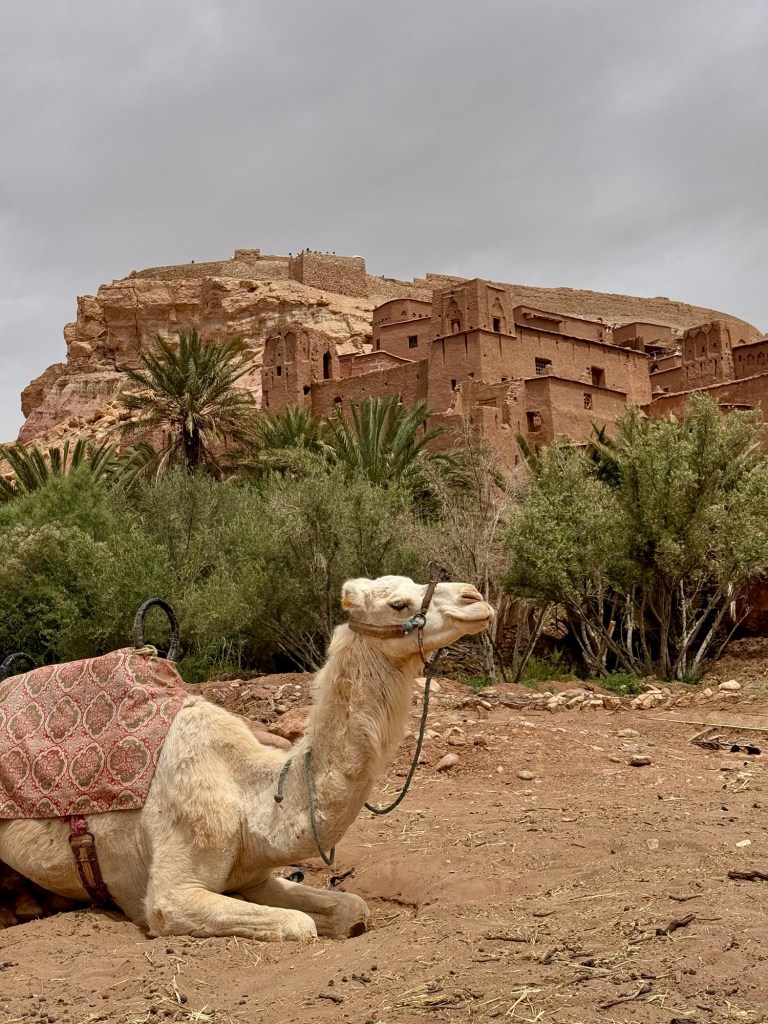
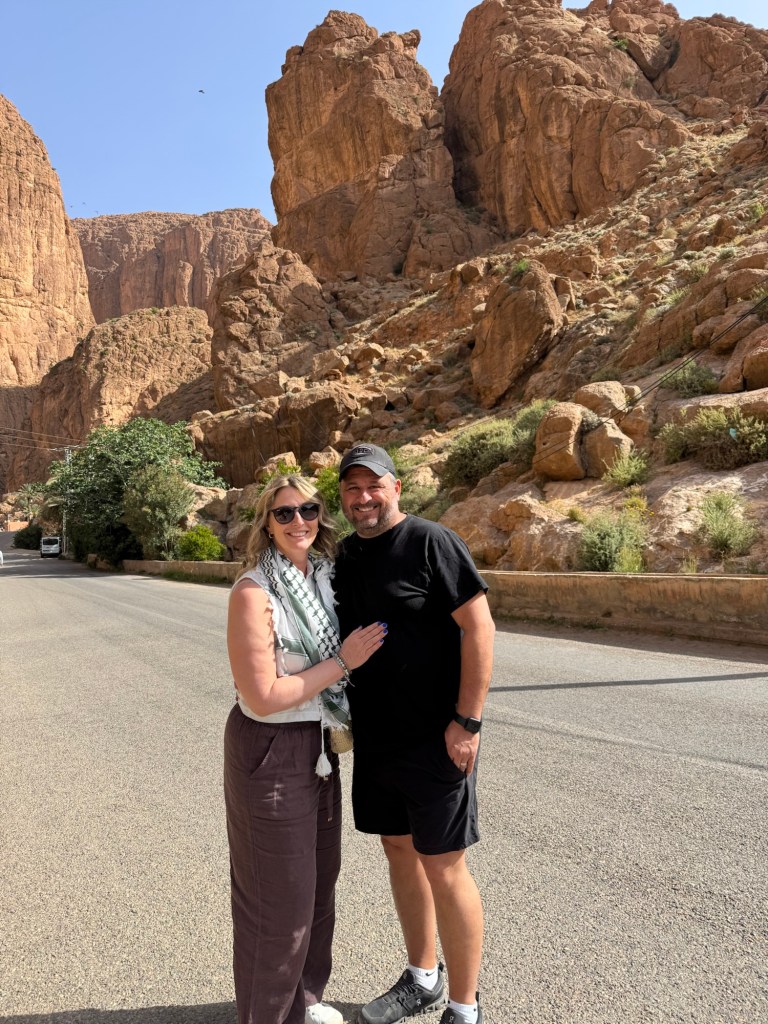
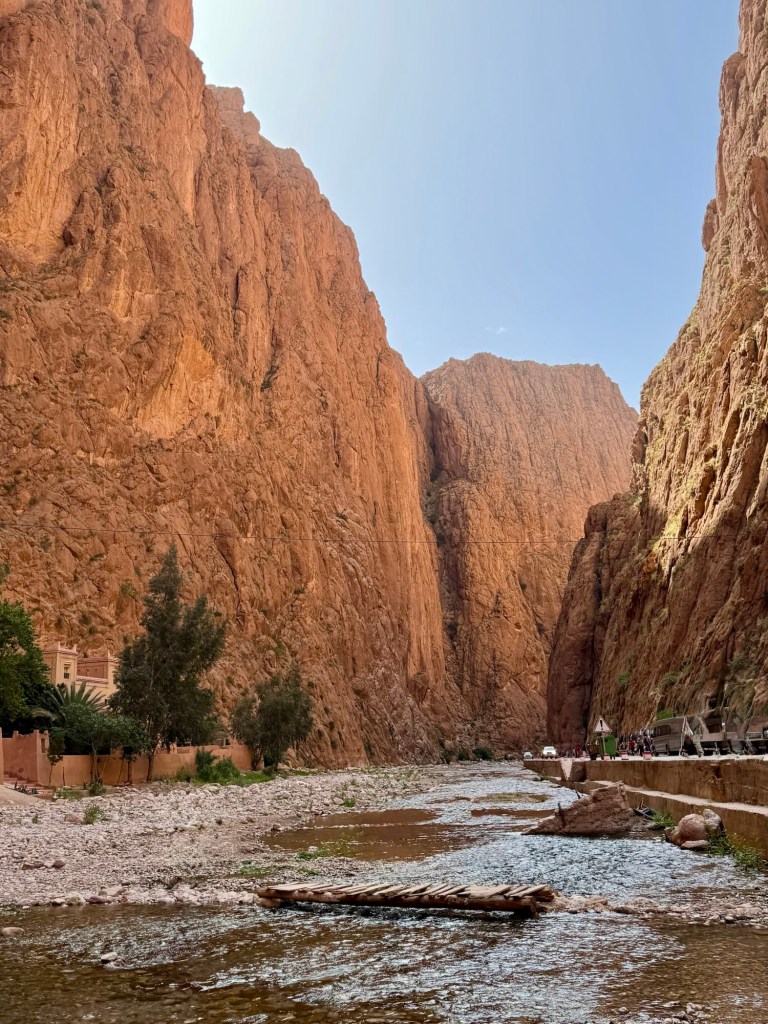
After an hour or so visit and a quick lunch stop, we continued our journey towards Tinghir via the Rose Valley. We were fortunate to stay in an incredible hotel nestled in the Todra Gorge, and were offered a family-style dinner with our travel group. The hotel we stayed at exceeded my expectations and it was the perfect spot to rest for the night. In the morning, we met up with another local guide who took us on a small hike through the Todra Gorge, which included a stop in a small Berber village where we learned all about the beautiful rugs made by hand. Back in the van for a 3-hour drive and we finally spotted the dunes of the Sahara, and caravans of camels along the way.
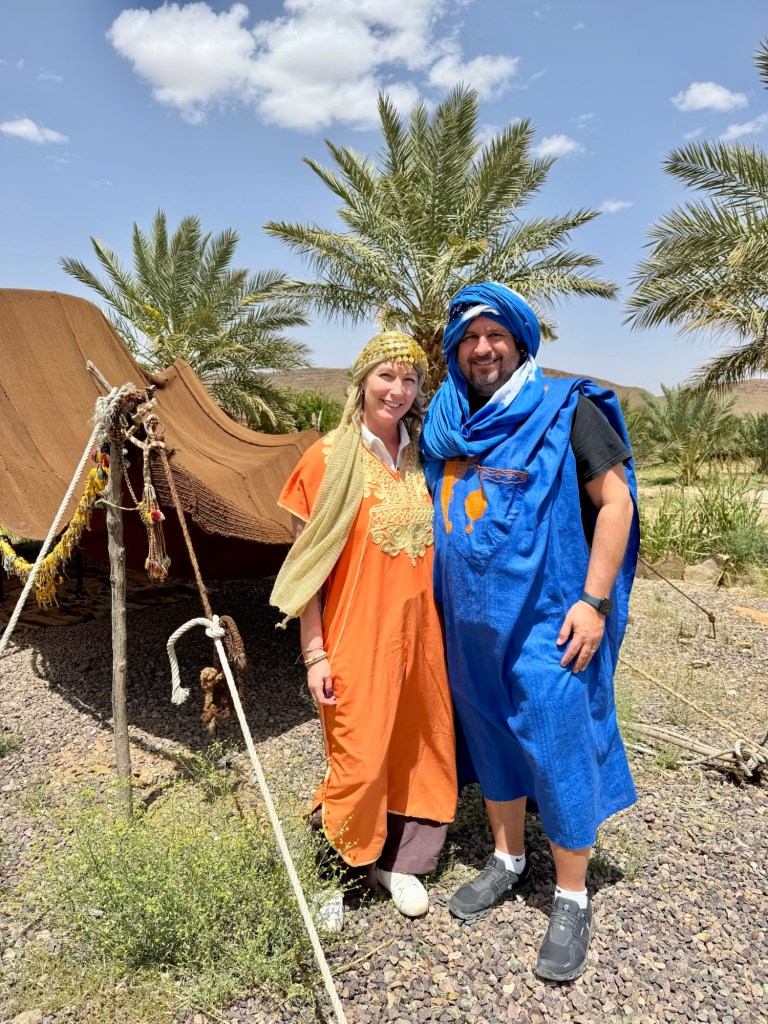
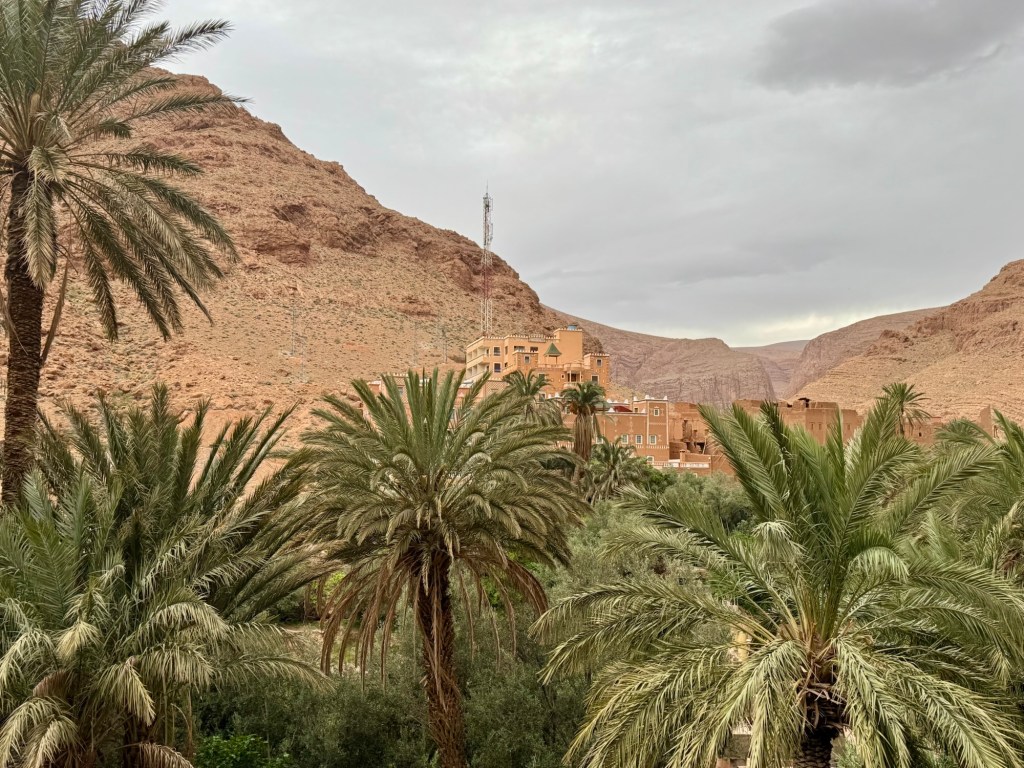
After a quick bathroom stop at a nearby service station, we made our way to the area where we would mount our camels and start our trek to our tent camp in the desert. At first glance, the camels were way taller than I expected, seemed well cared for and very well behaved. Our group of 15 was divided into 3 caravans, and with the help of a handler, we started our walk into the desert. While headscarves are not mandatory, they are definitely recommended because it is HOT out there.
It took about an hour to get to our camp, and riding a camel is very similar to riding a horse, without the stirrups. The general consensus was that everyone’s butts were hurting on arrival. But what a feeling it was to all of a sudden arrive at camp, nestled into the dunes! There was a mix of tent options, from shared to private, all of them quite comfortable. Solar panels powered a plug in and light in each tent, and the mattresses were comfortable (although a little sandy). We personally made the decision go with the shared option since we knew that we were only sleeping there for about 5 hours, so it wasn’t worth splurging on the private tent and bathroom (the cost difference was significant).
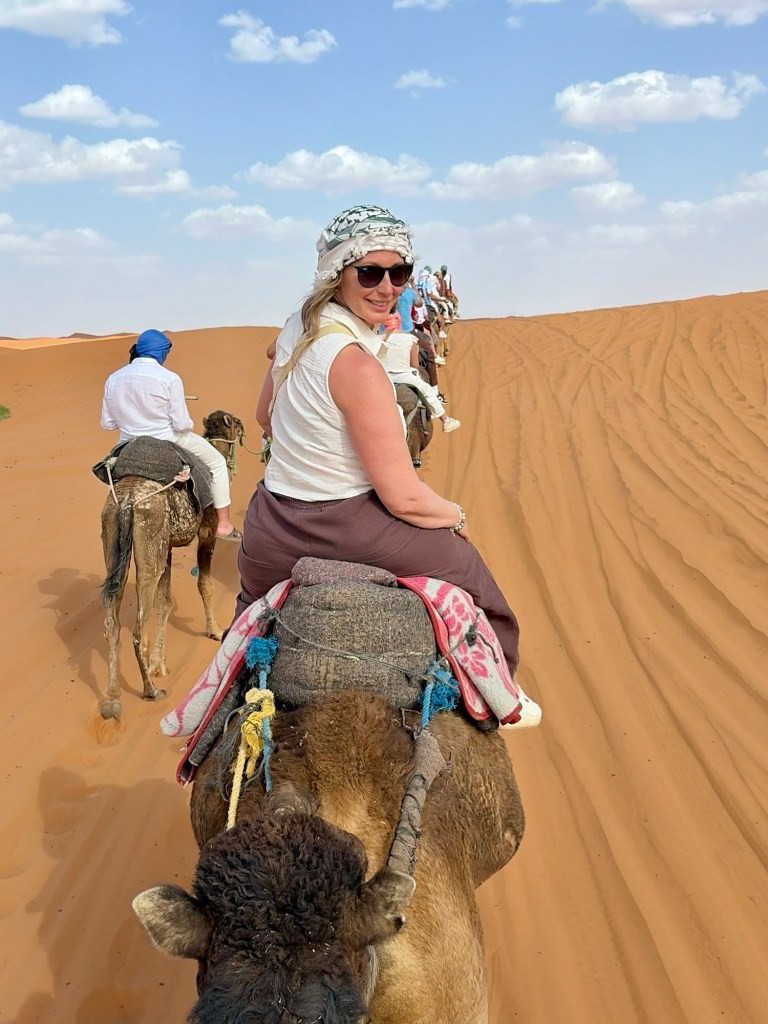
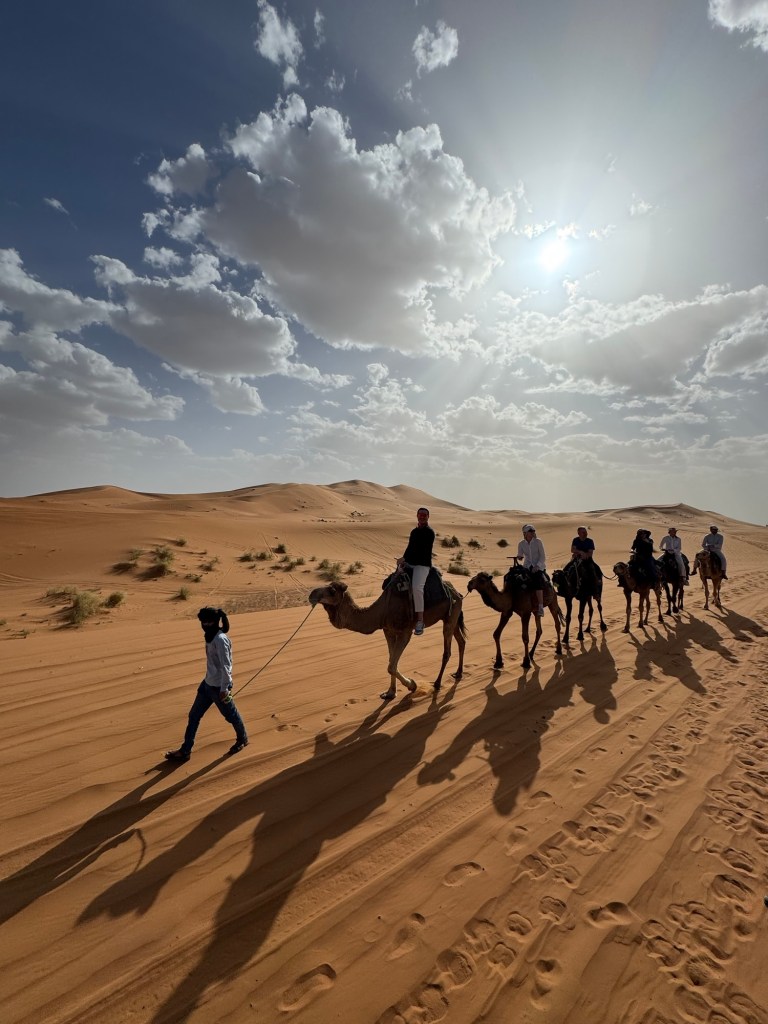
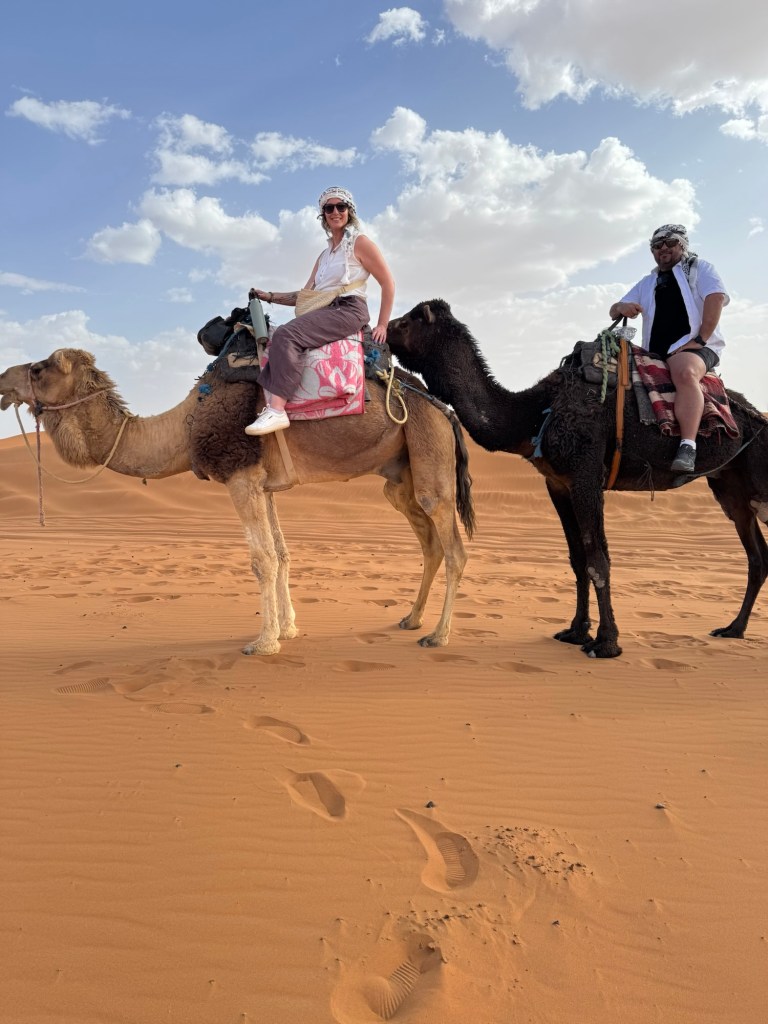
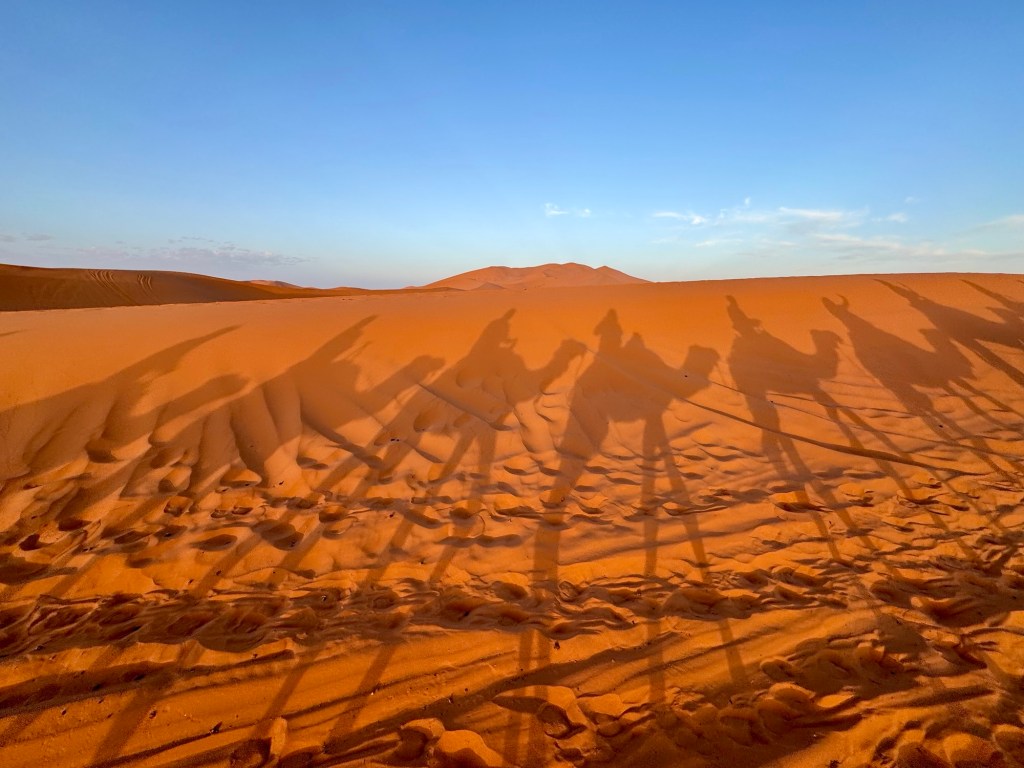
On arrival we were served some snacks and mint tea, and then we were given the opportunity to go sandboarding before the sun started setting. And what an incredible experience it was to watch the sun set in the Sahara. Nothing but sand dunes and camels as far as the eye can see, the colours exploding under that golden light. We then assembled in the food tent for another family-style meal (tagine, rice, vegetables, fresh bread). We capped the night off with a bonfire and some traditional drumming and music.
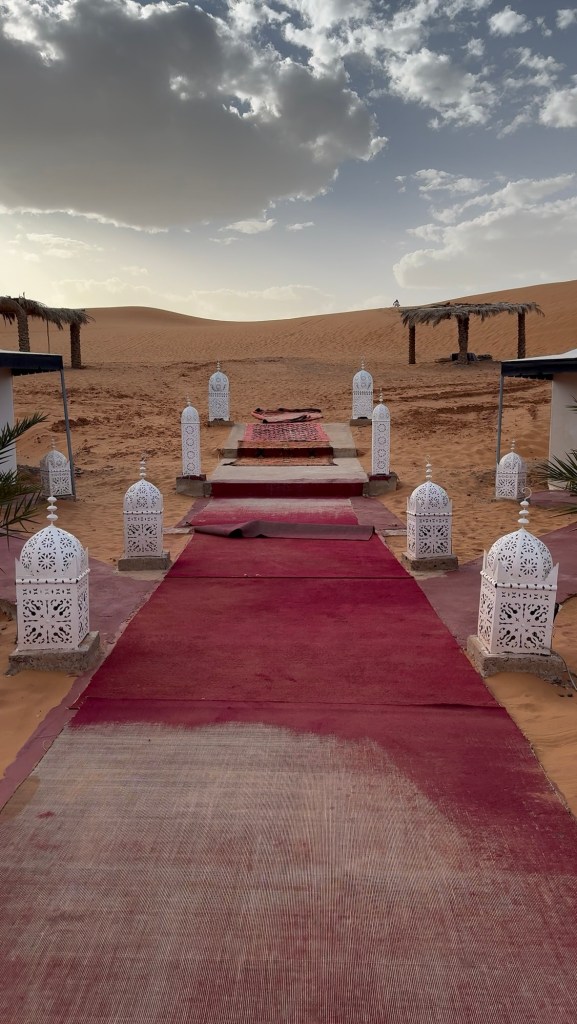
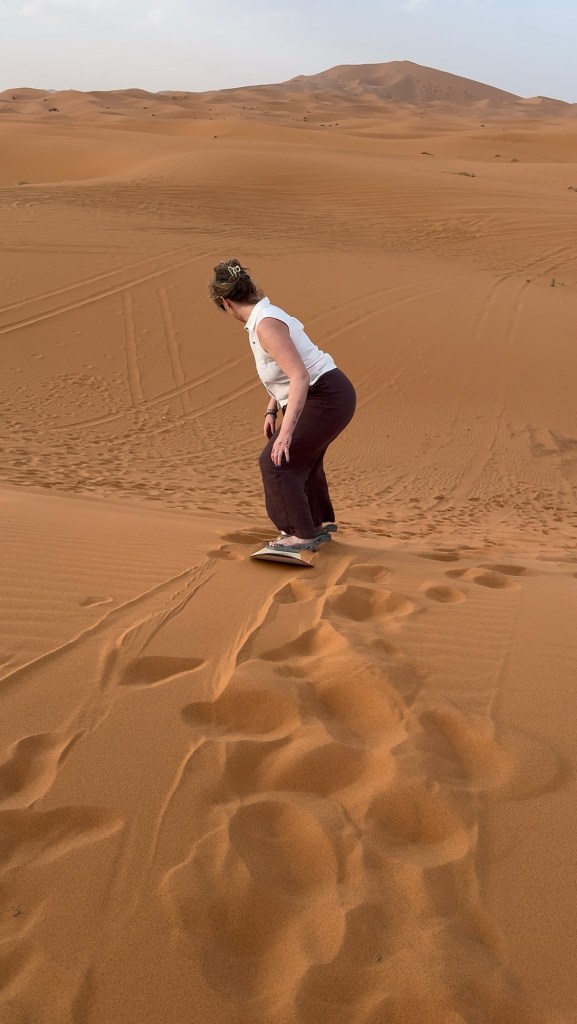
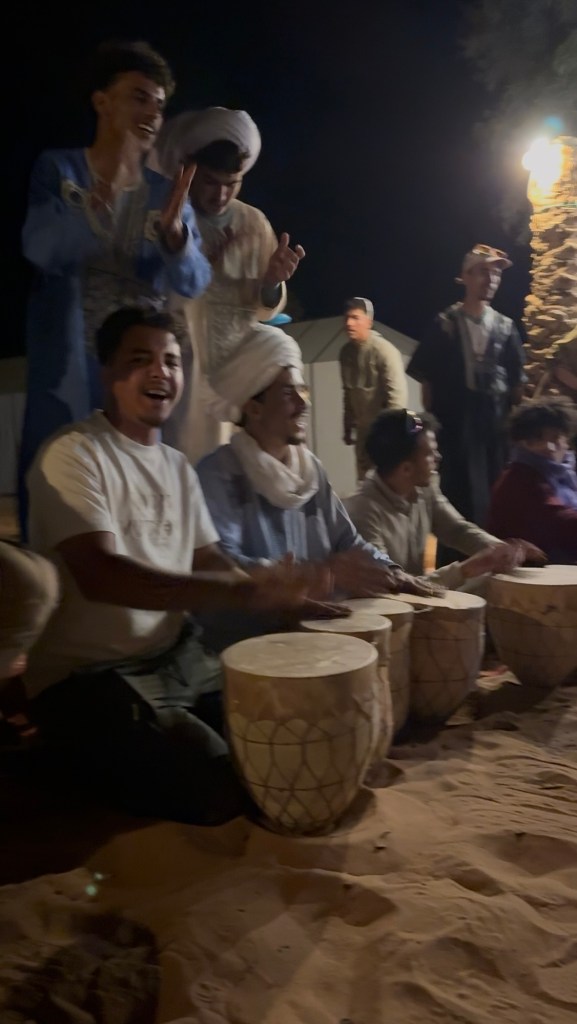
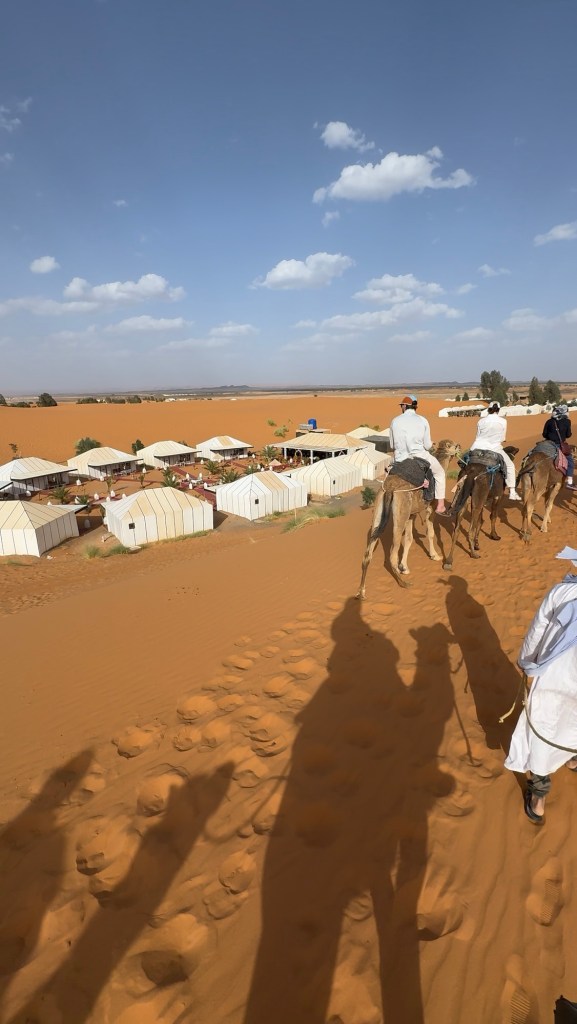
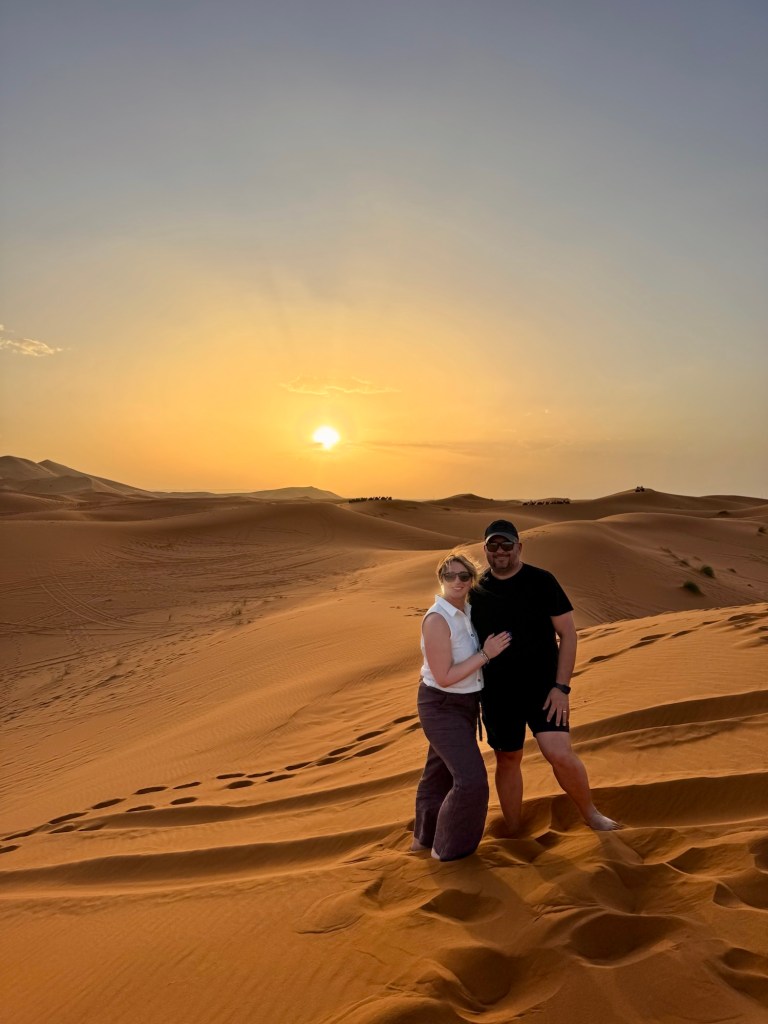
The next morning we had an early wake up to eat breakfast by 6 and be ready to go by 6:30, chasing the sunrise as we made our way back to the vans via camel. All in all, we were only in the desert for about 14 hours, but it definitely lived up to my expectations.
I wasn’t prepared for how the Sahara would make me feel. Standing in it — really standing in it, with nothing in any direction but sand and silence and an sky so big it feels almost aggressive — I was overwhelmed in a way I hadn’t expected. Grateful doesn’t quite cover it, but it’s the closest word I have. It was one of those rare travel moments where you feel genuinely small, and somehow that’s the most peaceful feeling in the world.
The drive back was painfully long since we had to tackle the full 10-hour drive in one day. We arrived back in Marrakech around 7:30pm, exhausted, sore, but grateful for the experience.
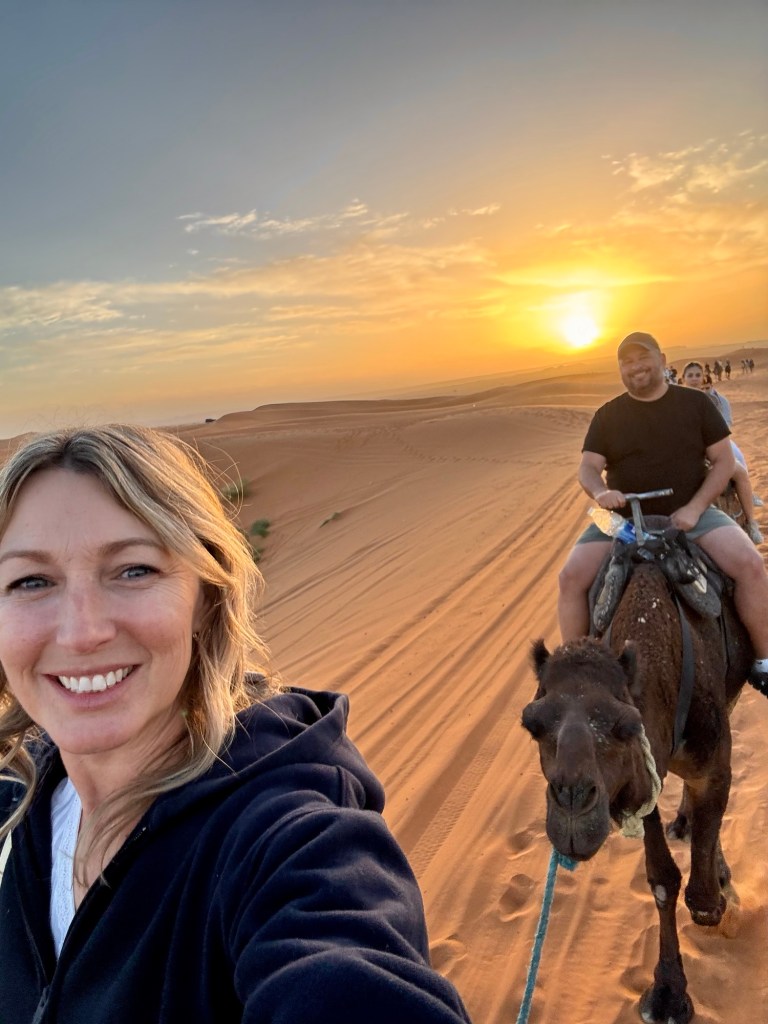
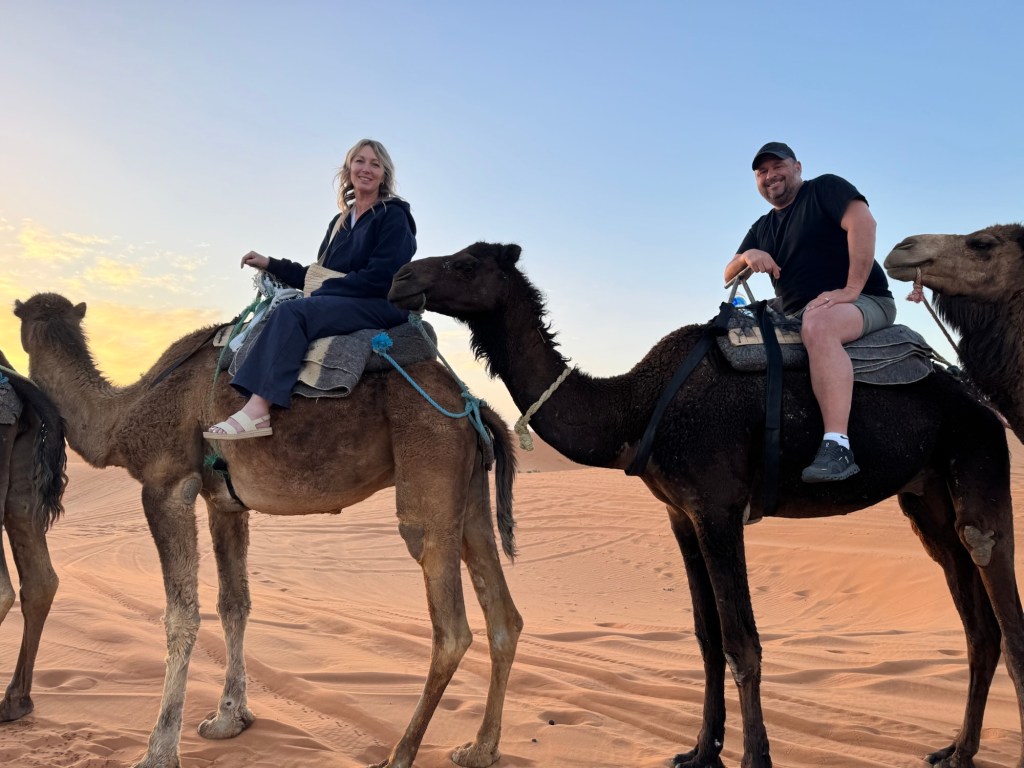
And this is the crazy part… that whole experience, consisting of transportation (20 hours in a van), 2 nights accommodation (1 hotel night in Tinghir, 1 night in the desert camp), 2 breakfasts, 2 dinners, and the camel experience, only cost $150 CAD/pp. That seems like highway robbery to me!! Add in an additional $90 CAD total for 2 lunches that we had to pay out of pocket, and the tip for the 2 local guides. What a steal for a bucket list experience like that!!
Essaouira
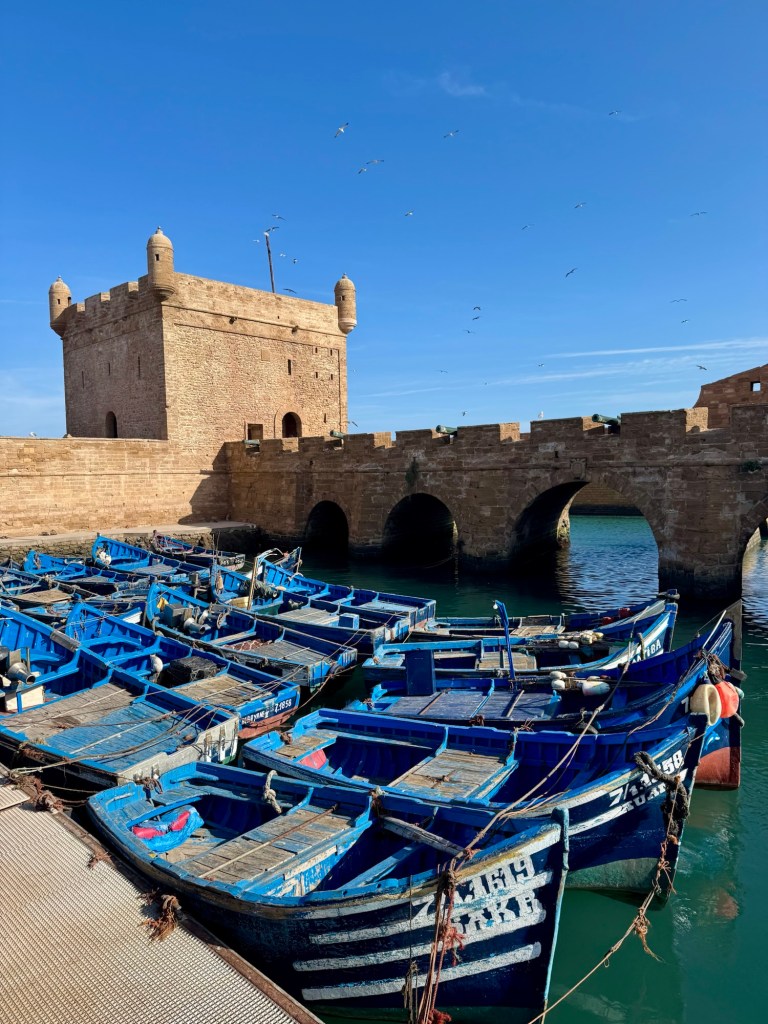
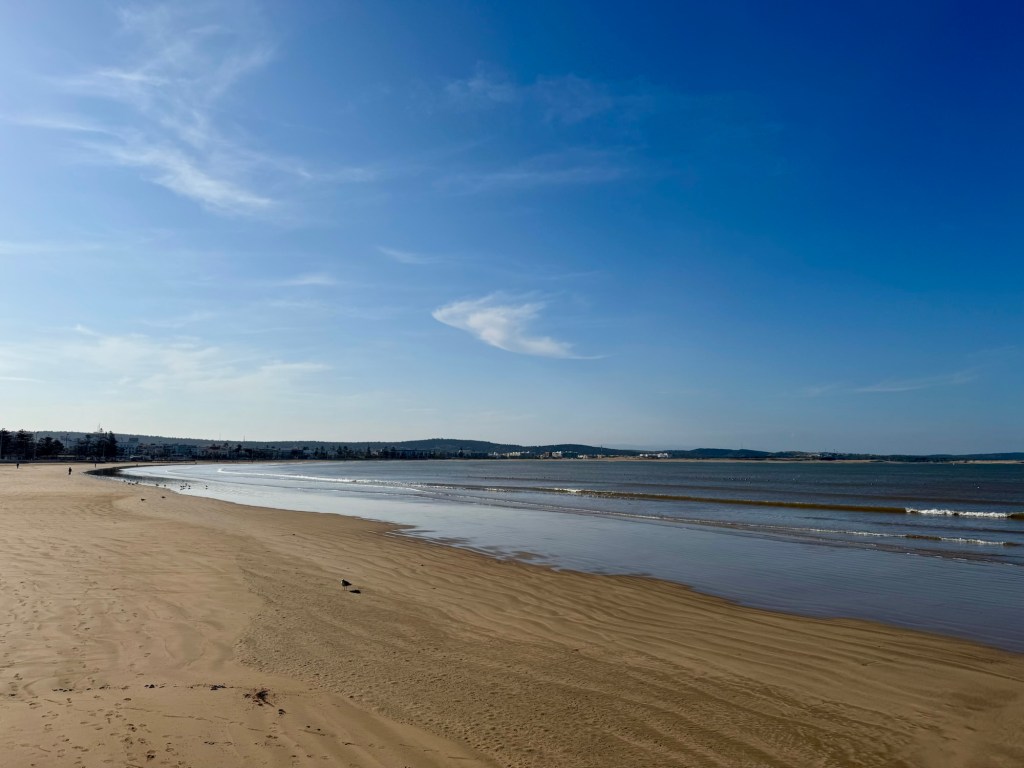
For our last few days, we boarded the Supratours bus and headed west towards the coastal town of Essaouira. The 3-hour ride was scenic and the countryside dotted with argan trees. The beaches there are beautiful and well known for kitesurfing. The town has a medina as well, and we stayed in a quaint Airbnb within the city walls.
This portion of our trip was way more relaxing than our time in Marrakech. The souks were way calmer (no motorcycles or donkeys here), the prices cheaper (less negotiating room though), and vibes way chiller.
One of the highlights of our time there was a visit to a hammam, a traditional Moroccan bathhouse experience where you’re lathered in black soap that looks like tar, scrubbed down with a kessa mitt, and left feeling like you’ve shed an entire layer of skin. Our package also included an hour-long full body massage, and was worth every cent at 350 MAD/pp ($55 CAD/pp). It was well set up, with my husband and I in a private room for both the hammam and massage. One thing worth knowing before you book — even the tourist-friendly hammam experience involves being partially undressed, so it’s not one for the modest or self-conscious.
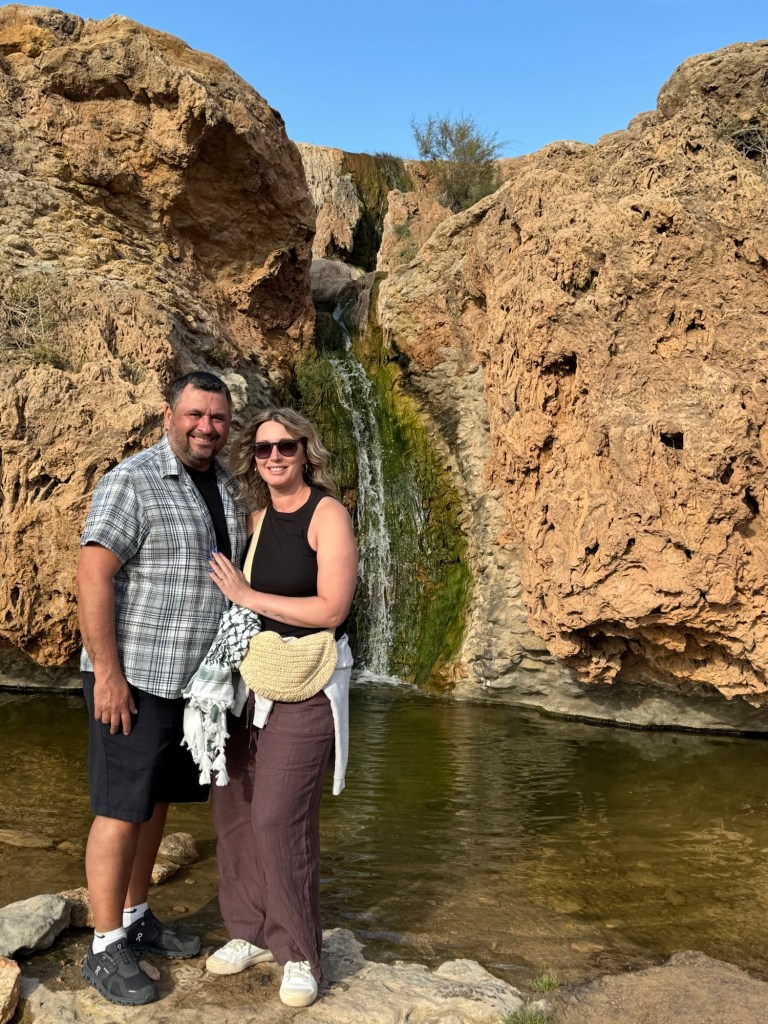
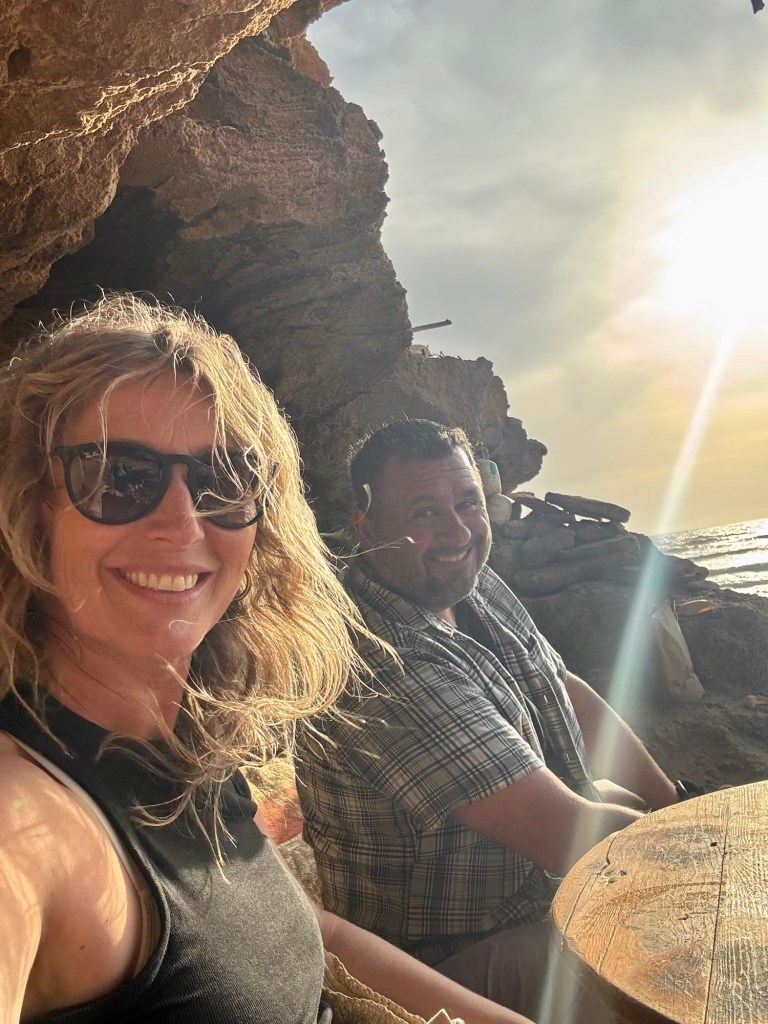
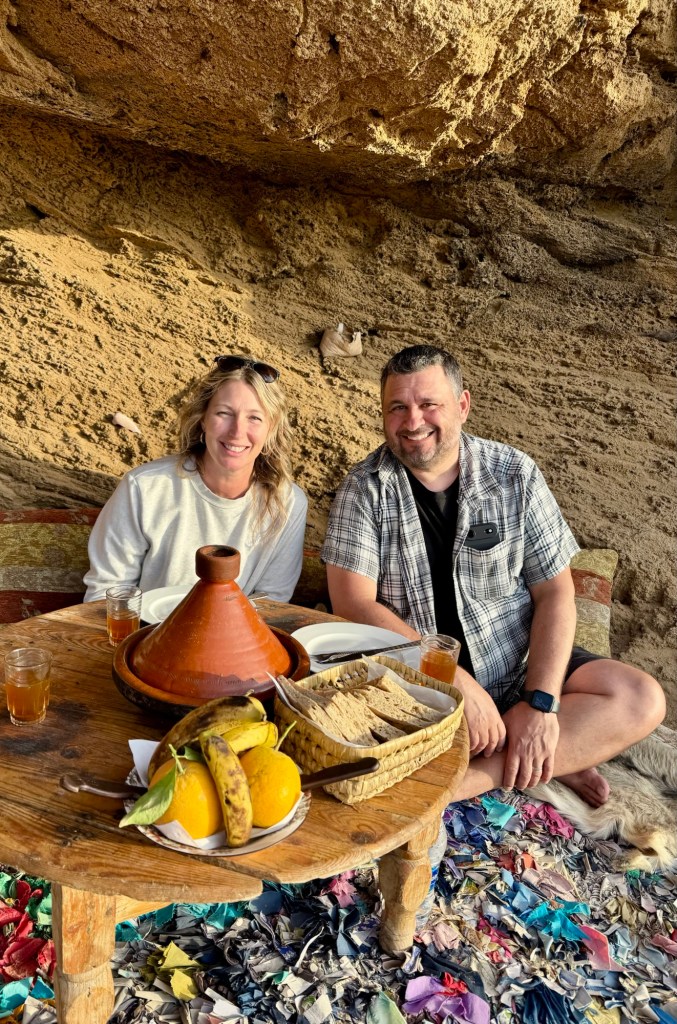
We also booked a unique dinner experience that included a hike to the ‘waterfalls’ (water levels were low, so it was a bit underwhelming), and a romantic dinner in a cave on the beach. We were served fresh bread, tagine and local fruit, and the experience was a little pricey, but very unique. You certainly couldn’t beat the views during dinner in our little cave.
After 2 nights we returned to Marrakech for one final night and a last shot at purchasing some last minute souvenirs.
My overall impression of Morocco
All in all, Morocco was an amazing experience, one that I think should be experienced once in a lifetime, but I don’t think it’s for everyone. It takes a certain amount of adventurous spirit to survive the chaos of Marrakech. An overly anxious person would not enjoy the constant hustle and bustle and maze-like medinas. If you do visit, I think 10 days is a good amount, but I would have liked to add in a visit to Fez, known for its leather tanneries, or Ouarzazate to see the big movie studios, or even Chefchaouen, the picturesque blue city, but I feel like that would have required 14 days instead of the 10 we spent there. I may return someday on a day trip from Spain (there’s a daily ferry that goes to Tangier), but I don’t feel the need to revisit it otherwise.
It’s a great fit for first-time adventure travellers who want something genuinely different from Europe but without the complexity of deeper Africa. It’s brilliant for photographers since almost every corner of a medina is a shot. Budget travellers thrive there because the value is genuinely excellent — you can eat incredibly well, stay in beautiful riads, and fill every day with free or cheap sights without burning through money. Worth noting for Canadians specifically — the CAD to dirham (MAD) conversion works in your favour compared to USD or EUR, which is what most Morocco budget guides are written around, so your dollar tends to stretch a little further than the numbers suggest.
Cost breakdown (9 nights)
Flights: $749.71 each ($1499.42 total)
Accommodations: $589.54 total (7 nights)
Sahara experience: $164.31 each ($328.62 total)
Hammam experience: 350 MAD/pp (~$120 CAD total)
Transportation: $160 total ($100 CAD in taxis and $30 CAD/pp for bus)
Food & souvenirs: ~$1400
Total: ~$4,000 CAD


Leave a Reply